
Maqbool
Vishal Bhardwaj, 2003
The Setup
Shakespeare. Depending on your disposition, the name conjures either reverence or exasperation. Among the recent, incessant coverage of Sam Bankman-Fried’s fraud trial, one particular point stood out; Bankman-Fried resented Shakespeare, claiming the writer’s work consisted of “incredibly flimsy characters” and relied on “illogical plots and obvious endings.” The convicted felon ends his diatribe by proclaiming Shakespeare is merely “a shitty writer from hundreds of years ago.” Does Bankman-Fried, crusty batch of nature, have a point? Our middle and high school English curriculums were undoubtedly populated by Shakesepeare, and we inevitably wrote turgid essays about themes of fate in Hamlet and the nature of appearance versus reality in Othello. The answer to this question is an emphatic ‘no,’ but I’m not here to argue that point. Samuel Johnson, A.C. Bradley, and Emma Smith present better reasoning than I ever could.

Film adaptations of Shakespeare’s works are plentiful, but it’s a challenge few Indian filmmakers have embraced. Angoor (Gulzar, 1982), an adaptation of A Comedy of Errors, stood alone as the sole Hindi adaptation for many years. This brings us to Vishal Bhardwaj’s Maqbool, an adaptation of Macbeth that trades the Scottish highlands for the streets of Mumbai. Bharadwaj reimagines the story as a power struggle within Mumbai’s criminal underworld. Before I proceed, here’s a primer on the corresponding characters between play and film:
Macbeth - Maqbool
Lady Macbeth - Nimmi
King Duncan - Abbaji
Banquo - Kaka
Fleance - Guddu
Macduff - Riyaz Boti
Malcolm - Sameera
The Witches - Inspectors Pandit & Purohit
Bharadwaj takes a few liberties with his interpretation. Namely, the Lady Macbeth character, Nimmi (Tabu), is not Maqbool’s wife, but rather the wife of Abbaji (Pankaj Kapur) with whom Maqbool (Irfan Khan) is having an affair. The character of Malcolm, King Duncan’s son, is changed to a daughter in the form of Sameera (Masumeh Makhija). Lastly, the three witches are replaced by two corrupt police officers, portrayed as Inspector Pandit (Om Puri) and Inspector Purohit (Naseeruddin Shah).
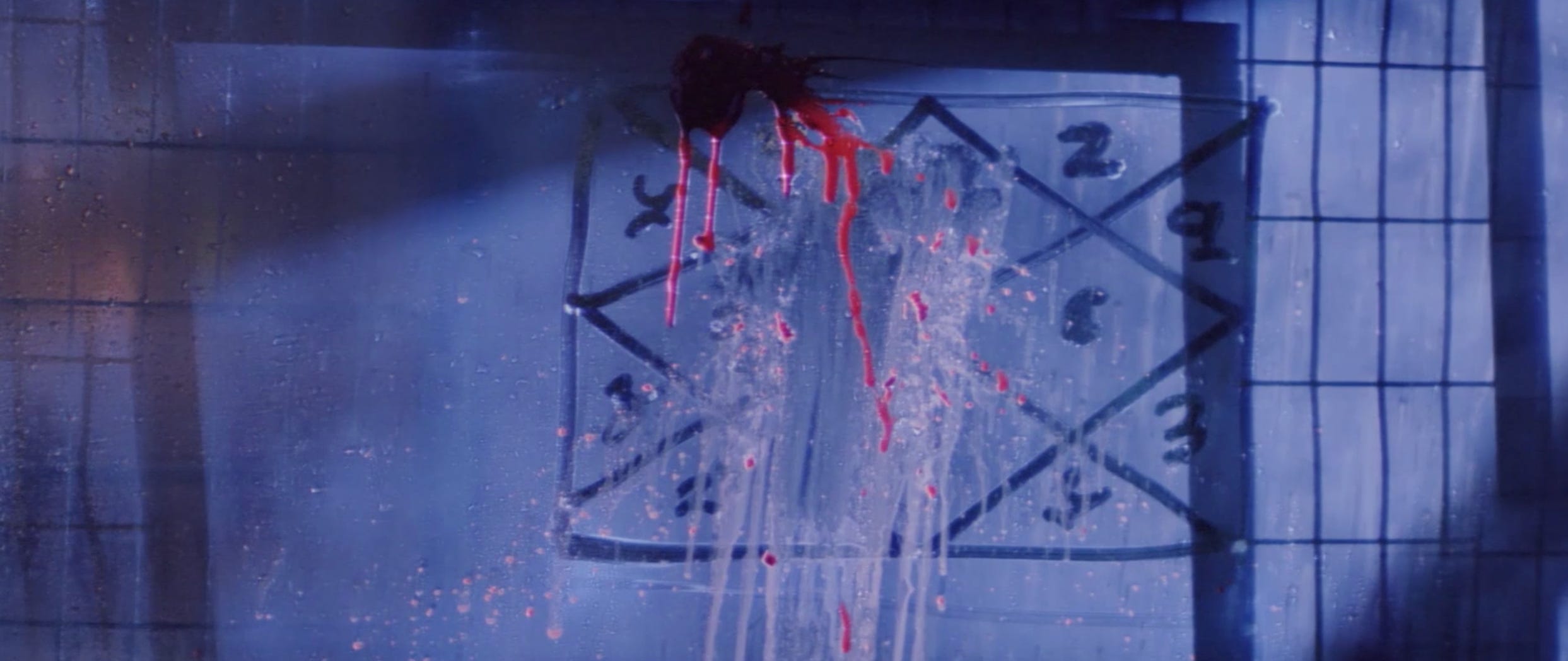
The film begins with the two policemen sitting in the back of their car on a rainy night, gossiping with a low-level goon (played by Abbas Tyrewala, co-writer of the film) about the recent happenings within the Mumbai mafia. Amidst the jokes and laughter, Inspector Pandit begins drawing a horoscope on the steamy window and makes a prophecy: Maqbool, not Abbaji, will emerge as the victor and rule over Mumbai. Moments later, Inspector Purohit shoots the goon in the head, splattering his blood and brains all over the window on which Inspector Pandit had drawn the horoscope. Ominously, not to mention callously, Pandit chides his partner as he points to the horoscope,
Dekh kar maara kar! Poori Mumbai khoon se bhardi, (Watch how you shoot! You filled Mumbai with blood.)
Shortly after, Pandit repeats the prediction directly to Maqbool and Kaka, taking both of them by surprise. They immediately brush off the suggestion, implying the policemen have had too much to drink. Like the loyal lieutenants they are, they assert that Abbaji has the only possible claim to the throne. The policemen are insistent. “King of kings,” Inspector Pandit declares. Despite rebuffing the divination, Maqbool has an air of detached intrigue which turns into engagement when Inspector Purohit augments the prophecy by claiming that the only person who can stop Maqbool’s rise is Kaka’s son, Guddu.
The party breaks up moments later, but the prophecy hangs over Maqbool. He tries his best not to think about it, but forces converge to make the outcome increasingly plausible. Complicating matters is his affair with the boss’s wife, Nimmi. Nimmi goads Maqbool for not being more forthright with his intentions and challenges him to prove himself by eliminating Abbaji so that they can be together. Furthermore, she insinuates that because Maqbool won’t do what’s necessary for him to step over Abbaji, Guddu will usurp the throne by marrying Abbaji’s daughter, Sameera.
A man seemingly devoid of ambition, happy to blindly carry out orders without concern for their ramifications, becomes increasingly consumed by the need for power. The psychological effects of this pursuit are laid bare for us to witness. Bhardwaj depicts a world full of corruption and decay whose inhabitants can’t escape their fate, no matter how hard they try to warp their morality to match their actions.
Fair is Foul, and Foul is Fair
While the three witches in Macbeth act as mysterious and supernatural forces, operating without motivation, their counterparts in Maqbool play a much more active role in the story. In a sharp contrast to the witches, the police officers actively shape the narrative of the film by inserting themselves into the lives of the criminals they’re supposed to be working against. Consider the difference between these two sets of characters in their first appearance in the play and film, respectively.
Act One, Scene One of Macbeth is one page, a mere eleven lines. The witches appear amidst thunder and lightning, and confirm when and where they’ll meet Macbeth. The witches reappear two scenes later, presenting their prophecies to Macbeth and Banquo. The former challenges them,
Say from whence you owe this strange intelligence?
Or why upon this blasted heath you stop our way with such prophetic greeting?
Speak, I charge you (1.3.75-78).
Shakespeare never establishes why Macbeth has been chosen as the recipient of the prophecies. In a way, neither does Bhardwaj. As the cops gossip with their informant at the start of the movie, Inspector Pandit doesn’t explicitly say why Maqbool is the chosen one. However, it becomes apparent from this opening scene that the cops are on Abbaji’s payroll.
Aap Abbaji ke aadmi hain? (You’re Abbaji’s men?)
the informant incredulously asks when he realizes he’s about to be killed. The policemen’s motivation is far more apparent: working for the city’s biggest criminal keeps them out of harm’s way and their pockets lined. Pandit and Purohit both translates to “priest” in English, but these two are anything but righteous.
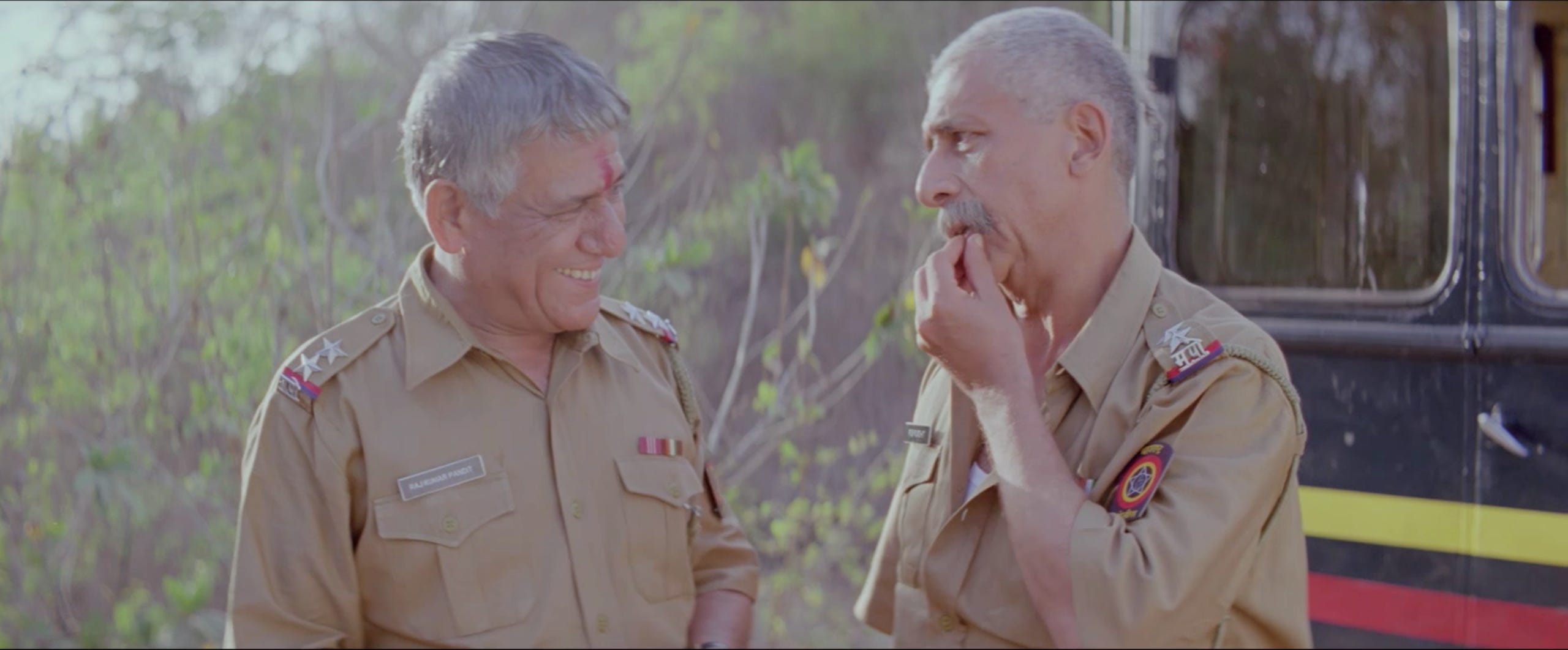
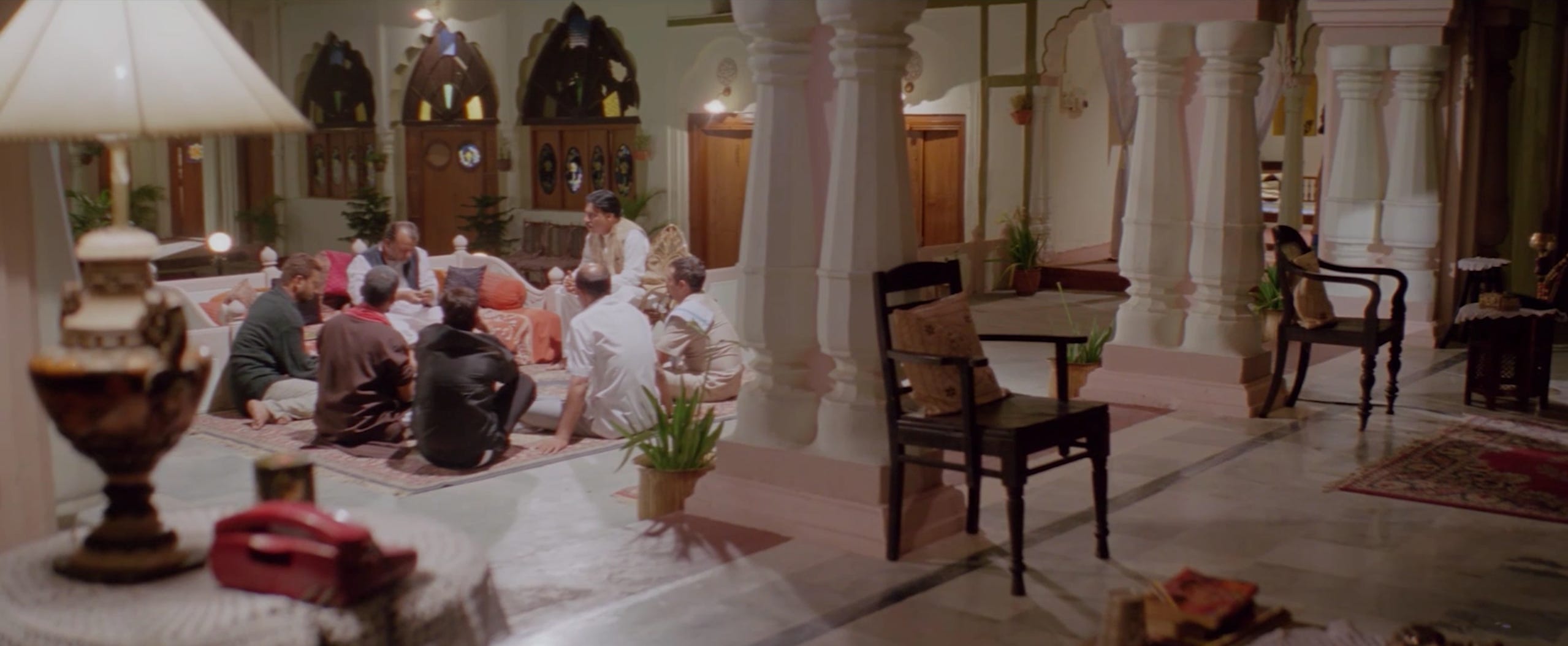
The inspectors serve their boss well. When a warrant is issued for Abbaji’s arrest, they intercept him on his way home from a mosque and tell him to avoid returning to the city. They’d much rather curry favor with Abbaji than their own superiors. Beyond the early prediction, the policemen are instrumental in exploiting Maqbool’s ambition. Midway through the film, at Sameera and Guddu’s wedding, Abbaji breaks down in front of a small group that includes Maqbool and the cops, lamenting how he wishes his older brother could have borne witness to the celebration had he not been murdered by a rival. It’s a moving scene, with the powerful mob boss weeping at the loss of his older brother. The previously raucous mood becomes immediately somber. However moments later, Inspector Pandit and Maqbool are sitting together, out of earshot of everyone else, and Pandit makes a startling insinuation:
Underworld mein na hote to film star hote. Kya actor hain Abbaji. Kamre mein theen log the: Lalji Bhai, ACP Maurya, aur Abbaji. Bache sirf yeh, (If he wasn’t in the Underworld, he’d be a movie star. What a great actor Abbaji is! There were three people in the room: Lalji Bhai (Abbaji’s brother), ACP (Assistant Commissioner of Police) Maurya, and Abbaji. Only he survived [points to Abbaji]).
The remark implies that Abbaji killed his own brother to commandeer control of the mafia. At this point in the film, Maqbool has amassed greater responsibilities within the gang, and more importantly, has been goaded several times by Nimmi for not being more forceful. Coupled with these factors, Pandit’s insinuation sways Maqbool into killing his mentor and fulfilling the prophecy.
Throughout the movie, Inspector Pandit repeats a phrase:
Shakti ka santulan bohut zaroori hai sansar mein. Aag ke liye paani ka darr bane rehna chahiye, (The balance of power is very important in the world. Fire must fear water).
The personification of the aag differs at various parts of the movie, but at a late point in the movie, it comes to mean Maqbool. Once the prophecy is fulfilled, Maqbool seeks to further consolidate his power by eliminating any potential threats. He commands the policemen to kill Riyaz Boti, a high-ranking gang member who previously worked for Abbaji’s rival. The policemen take Boti to a remote location and Pandit playfully instructs him to run. He’s holding a gun while doing so and we expect him to shoot Boti in the back, making it look like he was killed while escaping police custody. However Pandit allows him to escape. His partner can’t believe it; they’ve actively ignored the new boss’s orders. When Purohit angrily questions Pandit, Pandit calmly repeats his erstwhile phrase. Purohit understands immediately; Maqbool’s ascendency to the top has caused disgruntlement among the rank and file. By allowing Boti to live, the policemen leave the door open to aligning themselves with a future rival to Maqbool’s growing ambition. It’s one of several selfish decisions the pair makes, always searching for the best possible outcome to their parasitic needs.
In contrast to the policemen and their ubiquitous presence throughout Maqbool, the witches in Macbeth only make four appearances. Their divinations serve as a catalyst for Macbeth’s ambition, but at no point do they insert themselves into the action. Their role is often seen as emblematic of the broader themes of fate, free will, and destiny, suggesting that certain events are preordained and inevitable. Bhardwaj uses the policemen not only as a catalyst for Maqbool’s transformation, but also as a narrative tool to drive the plot forward. Their instigations of violence, dubious control of information, and willingness to betray and manipulate those around them drive the tragic arc of Maqbool’s character. If Shakespeare’s witches represent the inevitability of destiny, Bhardwaj’s policemen embody the pervasive corruption that taints the course of human fortunes through clandestine influence and manipulation.

All That to Say This
Maqbool is among the best that Hindi cinema has to offer. Vishal Bhardwaj takes one of literature's most widely read plays and makes the story his own. This isn’t a Kenneth Branagh-style retelling of Shakespeare’s work; it’s an adaptation that injects a world of gritty realism, nuanced characters, and the pulsating energy of immorality into a eternal narrative, creating a cinematic masterpiece that seamlessly blends the essence of Shakespeare with the Mumbai crime genre.

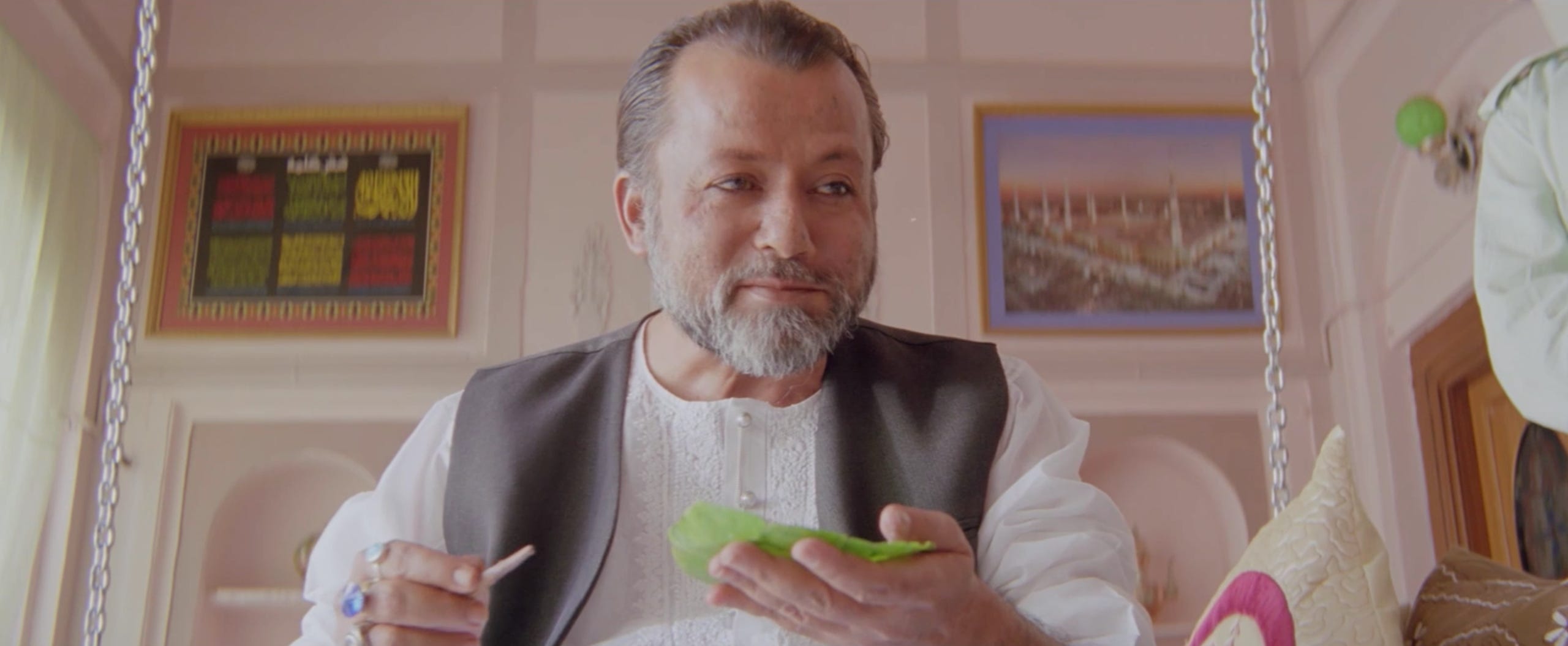
Shakespeare’s works attract the strongest actors and Maqbool is no different. The strength of the cast, and the perfection with which they embody their respective characters, elevates this film to the summit of Hindi cinema. Take, for example, Pankaj Kapur as Abbaji. Kapur shines in every scene he’s in as the fearsome mob boss, but it’s his mannerisms that help truly define the character. It’s the way he uses a toothpick to dig something out of his teeth, moments after having killed his brother-in-law for an act of treachery. It’s not enough to have killed a man while he begged and pleaded for his life; it’s as if in excavating the gunk from his teeth, Kapur is ridding him entirely from his consciousness, as if there were any lingering traces of remorse or empathy. He is a terrifying presence in every scene, and it’s a testament to the gait and gaze that Kapur gives the character that makes it so.
In my essay about Andhadhun, I wrote about Tabu’s character, Simmi, and her manipulative behavior towards practically everyone she encounters. While she plays a watered down version of Lady Macbeth in that movie, she plays the real deal in Maqbool as Nimmi, and does so with aplomb. Tabu delivers a flawless performance in this role, showcasing playfulness, cunning, and an enigmatic allure, crafting a character whose every gesture and expression speaks volumes. Not only does she draw Maqbool into an intricate web of emotions and intrigue, but the audience as well. She’s an indelible part of every scene she’s in. Early in the film, Abbaji chokes while eating, and Maqbool rushes to get water. Nimmi is in the next room, holding a jug of water, listening to the commotion of her husband gasping for air. Maqbool frantically reaches for the jug only for Nimmi to pull it away every time he gets close.
Aaj kal tujhe pyaas nahin lagti? (Aren’t you thirsty these days?)
she blithely says to Maqbool as she finally relents. It’s Tabu’s wry smile as she delivers this line that deescalates the scene, not the water.
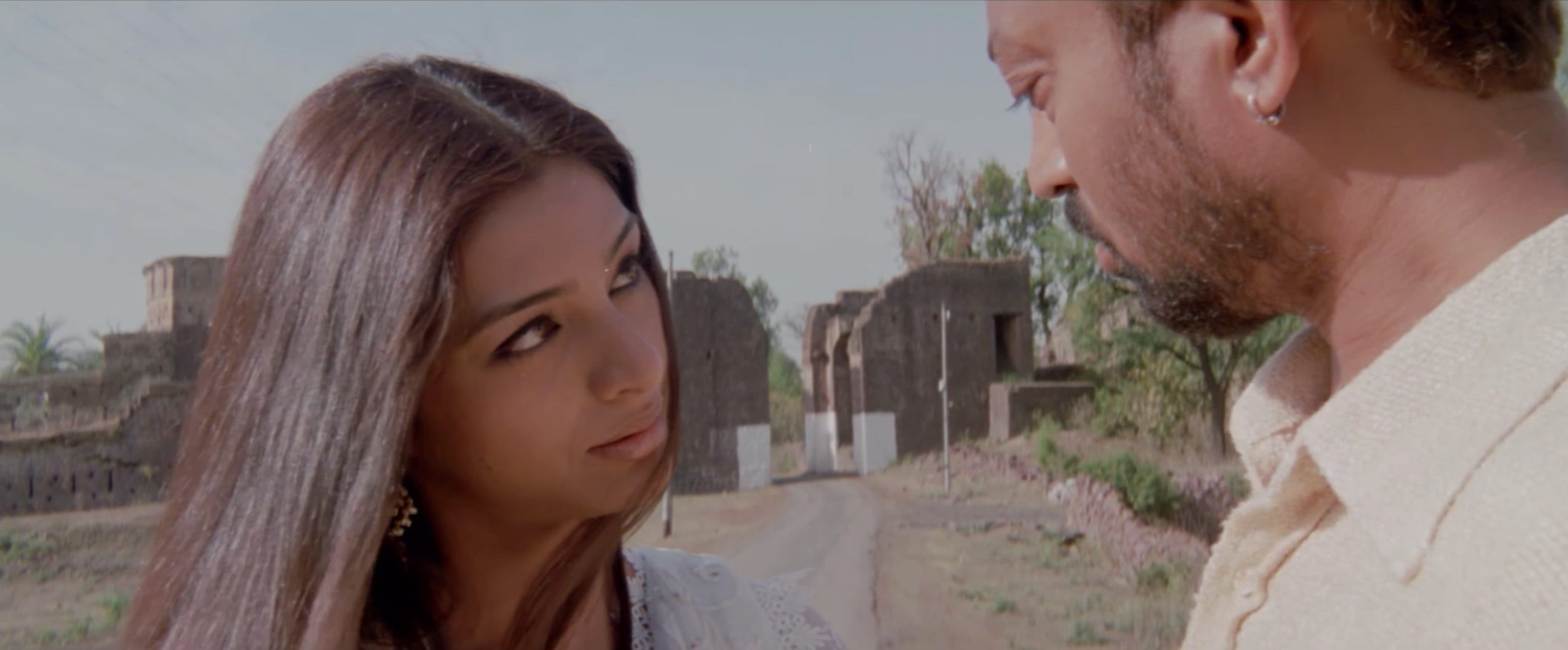
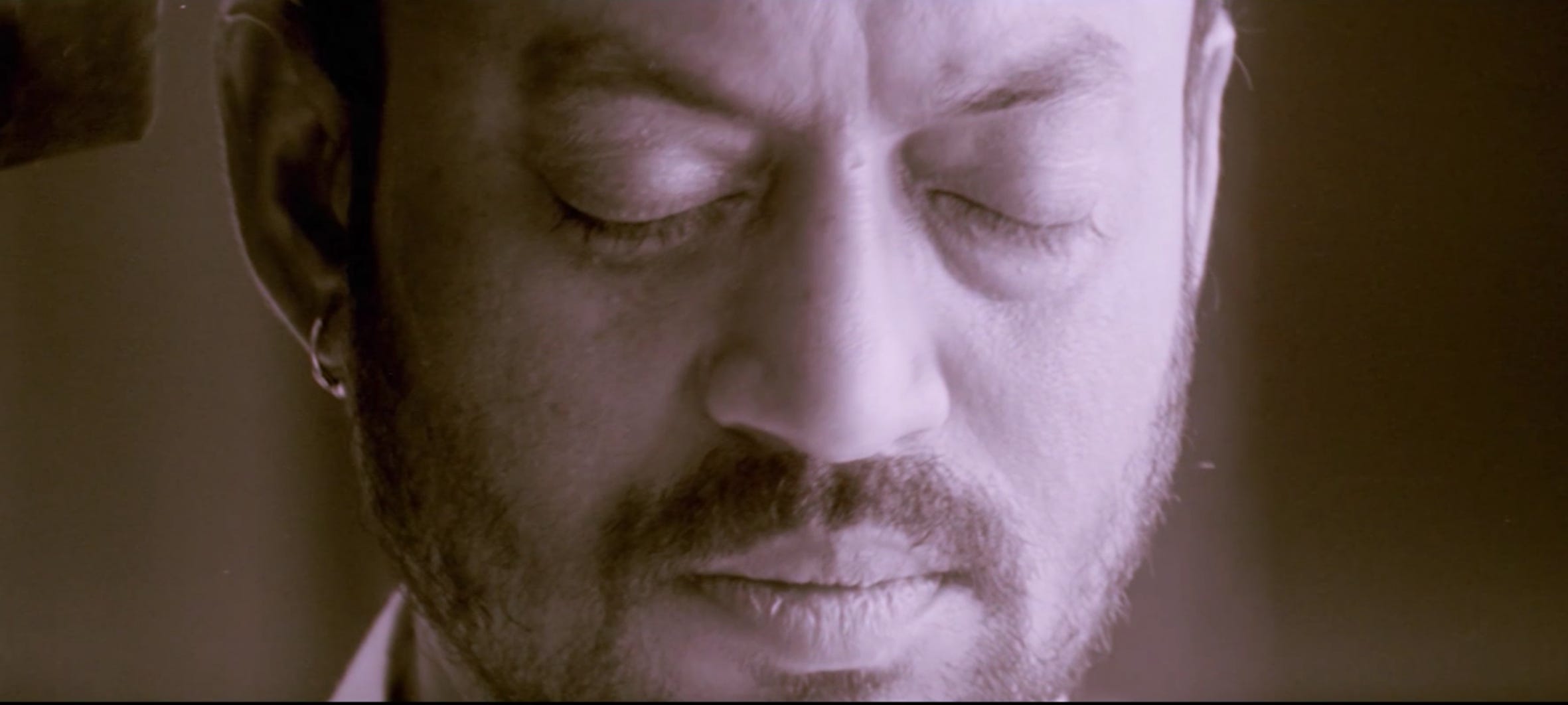
It’s impossible to write about Maqbool without talking about the man who plays the titular character, Irrfan Khan. There has perhaps never been a better rendition of the character Macbeth than Irrfan’s iteration. His pouchy eyes see everything, and the forceful intensity he brings to each scene elevates the character beyond the confines of the script. It’s an unforgettable portrayal that lingers in your mind long after the movie ends. The scenes between Irrfan and Tabu are the highlight of this film. The interplay between the actors is characterized by palpable chemistry; their magnetic connection and extraordinary synchronization of their craft turns every dialogue into a mesmerizing exchange. Consider the first time Nimmi directly challenges Maqbool for his inability to assert control over his circumstance:
Tumhari himmat nahin hoti thi hum pe nigha daalne ki. Phir bhi tumhari niyat malum thi humko. (You never had the courage to look me in the eye. Still, I knew your intentions).
There are several moments of silence during this conversation which only heightens the actors’ performance. Tabu’s gaze never breaks from Irrfan, aptly illustrating her character’s resolve and assuredness.The dialogue continues:
Baaran til hain humare badan pe. Kahan kahan hai, dekho ge? (There are twelve moles on my body. Want to find out where they are?).
Nimmi’s devastating and dangerous invitation leaves Maqbool speechless, but while Tabu’s gaze doesn’t break as she delivers the line, Irrfan responds by trying to meet her gaze and failing. He tries to keep up, but buckles under the scrutiny of Nimmi’s eyes. Irrfan doesn’t play the character as shifty or fidgety, which would be antithetical to the gangster we’ve witnessed put a gun in a man’s face in moments prior. Rather, Irrfan depicts a man who does his best to look his paramour in the eye with the confidence of a hardened criminal, but who ultimately fails, displaying feelings of shame, apprehension, and sensitivity - all without saying a word. It’s what acting should be.