
Andhadhun
Sriram Raghavan, 2018
The Setup
How far would you go in the pursuit of art? What are your limits? Do you even have any? A book that made a lasting impression on me when I first read it was James Joyce’s Portrait of an Artist as a Young Man. As a young man myself at the time, I was taken by the novel’s protagonist, Stephen Deadalus' journey from hedonist to ascetic, and ultimately artist, ready to make his mark on the world. Though I haven’t revisited the novel in some time, I do think of it often. Increasingly, I’ve been thinking of the ending, where (spoiler) Stephen decides to leave Ireland to pursue his calling as an artist. Remarkably, Stephen doesn’t produce any sort of art in the entirety of the novel. He thinks about art and aesthetics an awful lot, but we see little of substance when it comes to output. At a younger age, I didn’t think anything of this. At that time, merely thinking about creating felt like a high minded pursuit. Years later, I find myself thinking intent doesn’t matter. Only consequences.
Intentionality, the underlying motive behind human actions, drives the narrative of any story. Andhadhun artfully weaves a complex tapestry of intentions, deceit, and moral ambiguity. It’s a film that explores the intricate interplay of motives and actions, challenging the audience’s perceptions and beliefs. This film is about Akash (Ayushmann Khurrana), a blind pianist training for a piano competition in London, where he hopes the cash prize will jump start his career. His pursuit of a life as an artist brings him into the orbit of various people, some who encourage his quest and others who try to derail his journey.
The first is Sophie (Radhika Apte), who accidentally runs into Akash while riding her Vespa. Sophie’s father owns a restaurant that has a piano gathering dust, and the chance encounter allows Akash to land a gig where he can hone his skills. He quickly builds a following at the restaurant, which leads him to meet a retired actor, Pramod Sinha (Anil Dhawan). Pramod Sinha spends his days rewatching his movies from the 70s and reading YouTube comments about himself, much to the exasperation of his wife, Simi (Tabu). He hears Akash playing one night and invites him to come to his house the next day to play a private anniversary concert.
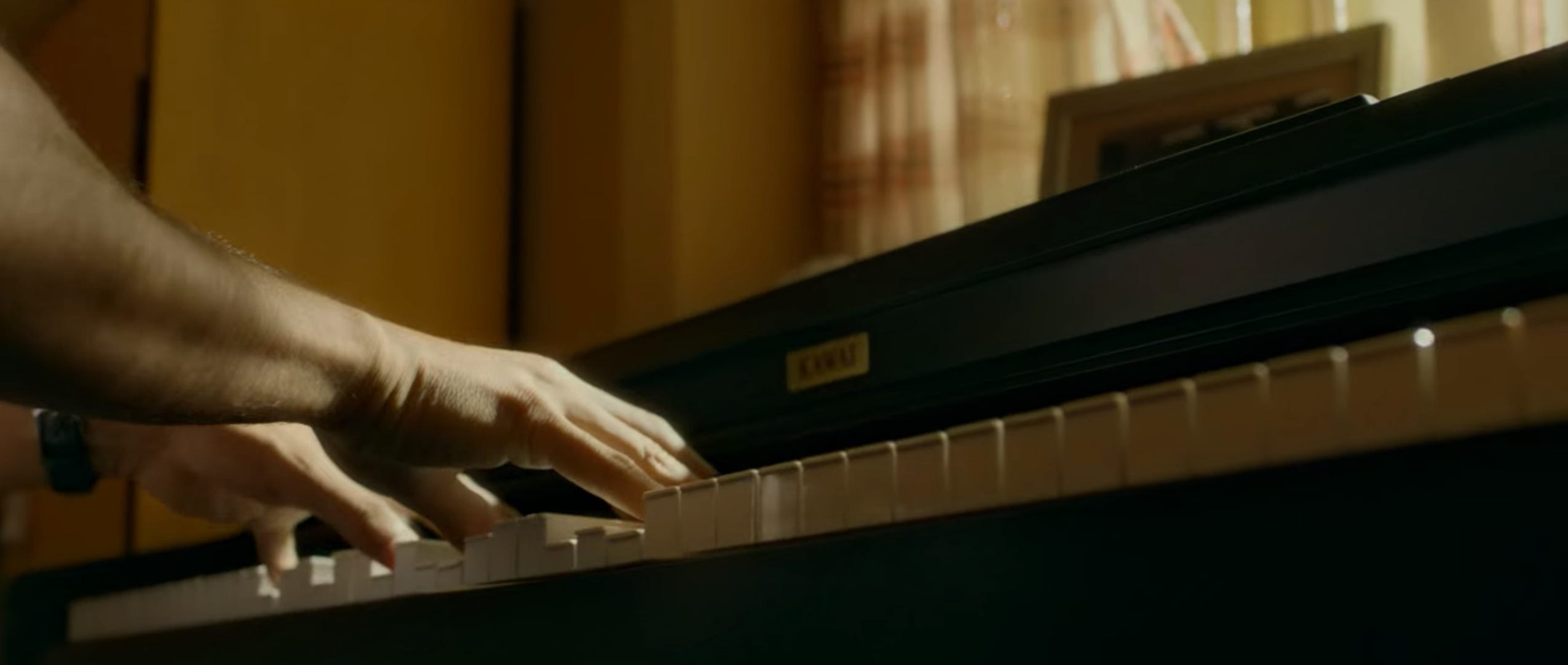
The convergence of these individuals produces a question, though not necessarily about the nature of art, or even what it means to create; it’s much more simple than that: what happens when a blind man witnesses a murder?
What’s Another Word for ‘Intention’?
Andhadhun plays on the contrast between sight and insight, using Akash’s blindness as a metaphor for the audience’s limited understanding of the characters’ true intentions. As the story unfolds, we’re forced to question the motives behind each character’s actions, leading to an engaging exploration of the complexities of human behavior.
Perhaps no character’s intentions are more interesting than the film’s femme fatale, Simi.

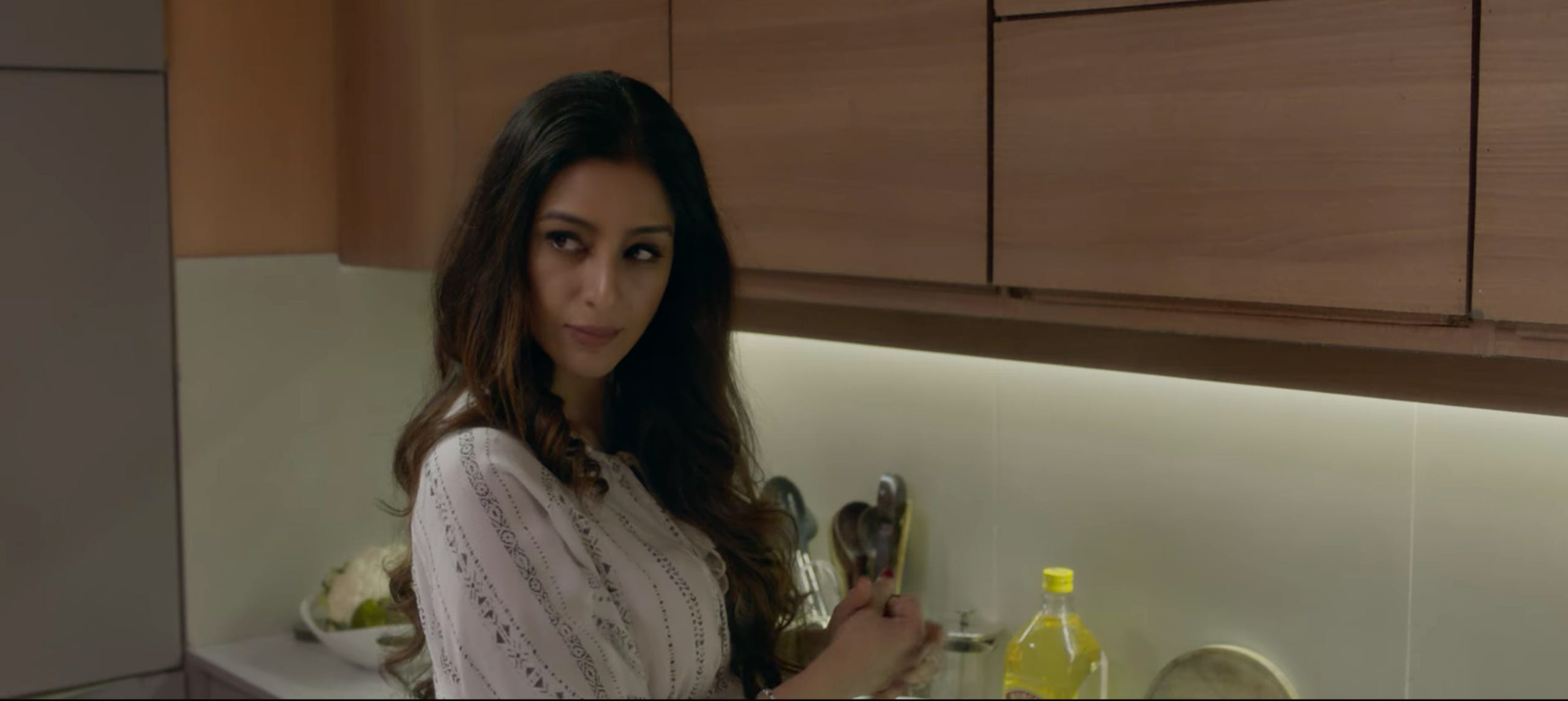
She reveals a variety of motives throughout the movie: greed, fear, a desire for freedom. Her first significant act is the murder of her husband. The intention behind it is simple: eliminate him and gain control of his wealth. The action sets the tone for her character’s willingness to take extreme measures to achieve her goals. When Akash shows up minutes after the murder, ready to perform for her anniversary, she quickly recognizes that their accidental crossing of paths is an opportunity to exploit his blindness for her own benefit. Her intention shifts from merely covering up her crimes to using Akash’s condition to her advantage. Simi posits that if she stages scenarios where Akash believes he has witnessed certain events, he can serve as a reliable alibi. However, as her body count rises and her schemes become increasingly convoluted, her motive seems to shift from self-preservation to a desperate bid to escape her situation. This evolution highlights the fluid nature of intentionality and how it can adapt to changing circumstances. What makes Simi’s all the more intriguing is her ability to convincingly switch between personas, manipulating those around her to serve her own ends. In Simi’s case, intentionality can rationalize even the most reprehensible actions.
Akash’s visual impairment amplifies his reliance on other sensory cues and his intuition, inadvertently placing him in situations that he struggles to interpret accurately. Yet, is it all that it seems? Early on in the film, Akash plays a series of rousing performances to packed crowds at Franco’s, Sophie’s father’s restaurant. It’s seemingly a straightforward display of Akash’s musical talent. It’s soon revealed to be a carefully crafted act. These early revelations not only force us to question our belief in the main character, but also set the tone for the film’s exploration of hidden agendas. When Akash becomes an unwitting witness to a murder, the discovery sets off a chain of events he struggles to fully comprehend. His immediate intention is to do the right thing and report the crime, but due to his supposed disability, how much can he reveal? As he becomes more entangled in the unfolding events, he becomes complicit in covering up the crimes he stumbles upon.
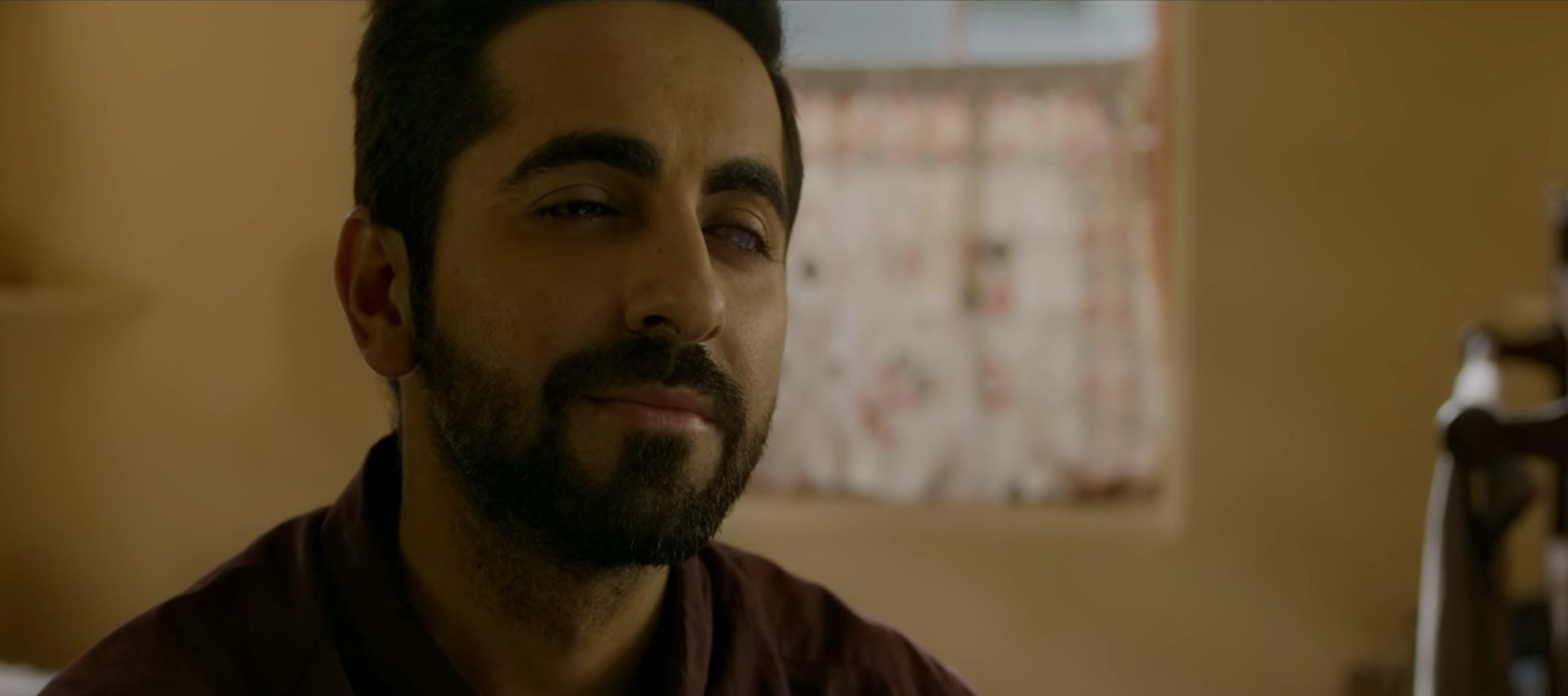
The complexity of intentionality as circumstances evolve and the choices we must make based on perceived best interests are key motifs in Andhadhun. Akash’s character serves as a lens through which the audience witnesses the ways in which individuals respond to morally ambiguous situations, adapt to change, and grapple with their own desires and limitations. Akash’s actions, guided by both genuine innocence and evolving self-awareness, contribute to the film’s overarching theme.
All That to Say This
Andhadhun is simply a fun movie to watch. It’s madcap, absurd, and above all, thrilling. In other words, it’s the perfect caper. The movie is slickly and deftly crafted, and while it can get a bit zany at times, its supremely interesting story and performances of the entire cast make it worth watching.
None more so than Tabu as Simi. Tabu is no stranger to impeccable performances, and appeared in two Hollywood movies as Ashima Ganguli in The Namesake (Mira Nair, 2007) and Gita Patel in Life of Pi (Ang Lee, 2012). She’s electric as Simi, and because she’s so adept at switching personas, you want to repeatedly see her on screen. She’s sultry, conniving, and menacing all at the same time, confounding the other characters she comes in contact with.
The premise of this movie reminds me of an Elmore Leonard novel: there’s sharp dialogue, strong, morally ambiguous characters, twists and turns, and despite the dark subject matter, there’s abundant humor. Nearly all of Sriram Raghavan’s films contain these elements, and there are little touches in this film where he illustrates his strength as a director. Consider when Pramod Sinha walks into his apartment the day of his anniversary, ready to surprise Simi with flowers and champagne, not knowing he’s about to be murdered. An instrumental version of the song Yeh Jo Mohabbat Hai (This Love) plays as he walks in. Specifically, we hear a piano rendition of the song’s opening stanza, which contains the following lines:
Yeh jo mohabbat hai (This love)
Hai unka hai kaam (Is the business of those)
Mehboob ka jo, bas lehte hue naam (Who in the name of their lovers)
Mar jaayein, mith jaayein, ho jaayein badnaam (Die, are destroyed, or ruined)
Why would anyone play such a song on their anniversary? Precisely before the moment Pramod is murdered, the instrumental reaches the chorus of the song, which declares,
Rehne do chodo, bhi jaane do yo yaar, hum na karenge pyaar (Leave it, let it be, I won’t fall in love).
It’s a remarkable moment of irony, and while the piano rendition of the song sounds light and breezy, its lyrics are anything but. The use of music in this way elevates an otherwise ordinary scene.
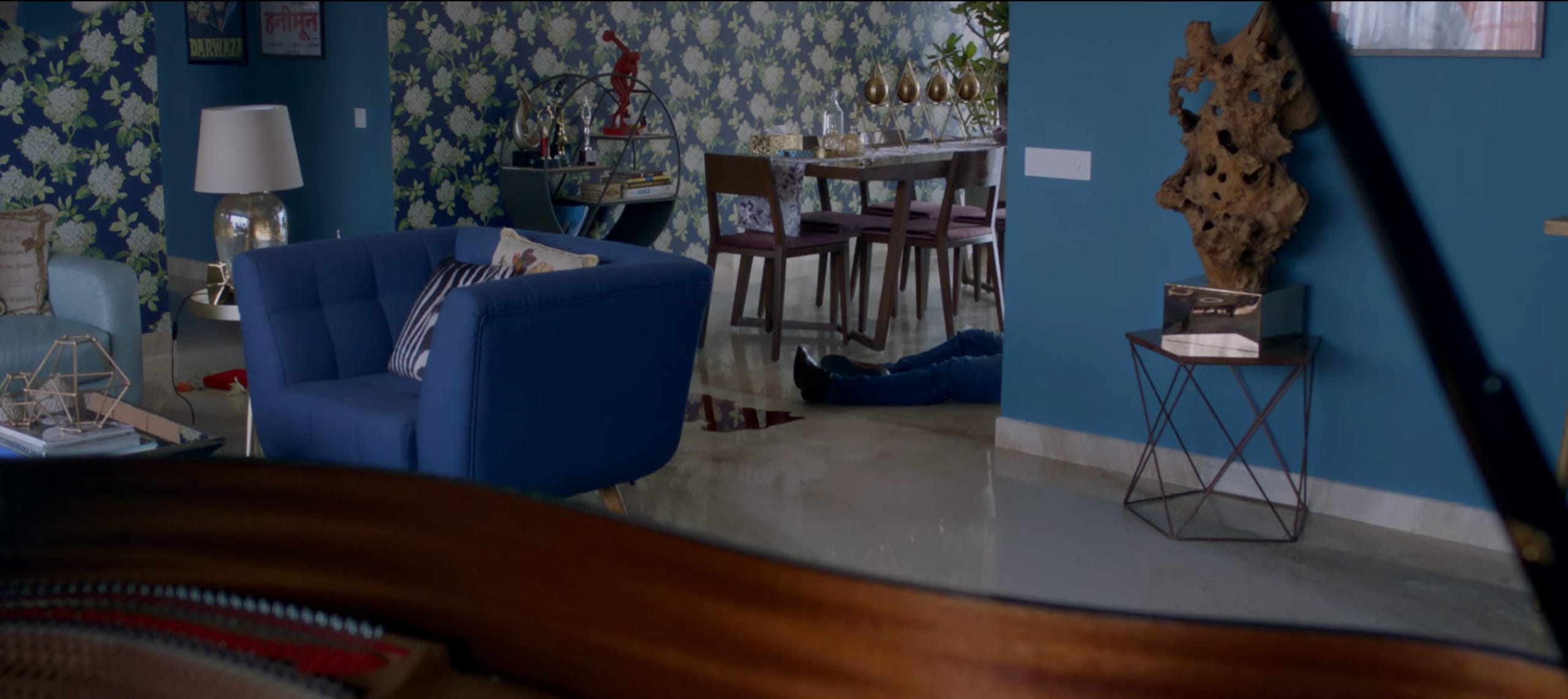
Seeing is believing, or so it’s said. Yet, oftentimes it’s hard to believe what we have seen for it defies our inherent convictions and proves to be too distressing for our constitution. And so, we begin to rationalize. The characters in Andhadhun rationalize a great deal of things. Does that make them bad people? What about us?