
Tere Mere Sapne
Vijay Anand, 1971
The Setup
Should success be measured by principle or consequence?
Let us consider ‘The Trolley Problem’: imagine a scenario where a runaway trolley is heading towards five people tied to a track. You have the option to pull a lever and divert the trolley onto another track where there is only one person tied. You must make a decision: harm five people or one?
If you were to pull the lever, one could argue that success in this scenario would be measured by consequence, as you’ve chosen to prioritize minimizing harm and maximizing overall well-being, resulting in saving five lives at the expense of one.
Conversely, if you were to do nothing, the argument could be made that success would be assessed by principle, as adhering to the moral rule of not intentionally harming others, even for the greater good, takes precedence over the consequences.
There is no right answer to this question; it’s one people have been debating for centuries. Artists, of course, are among them.
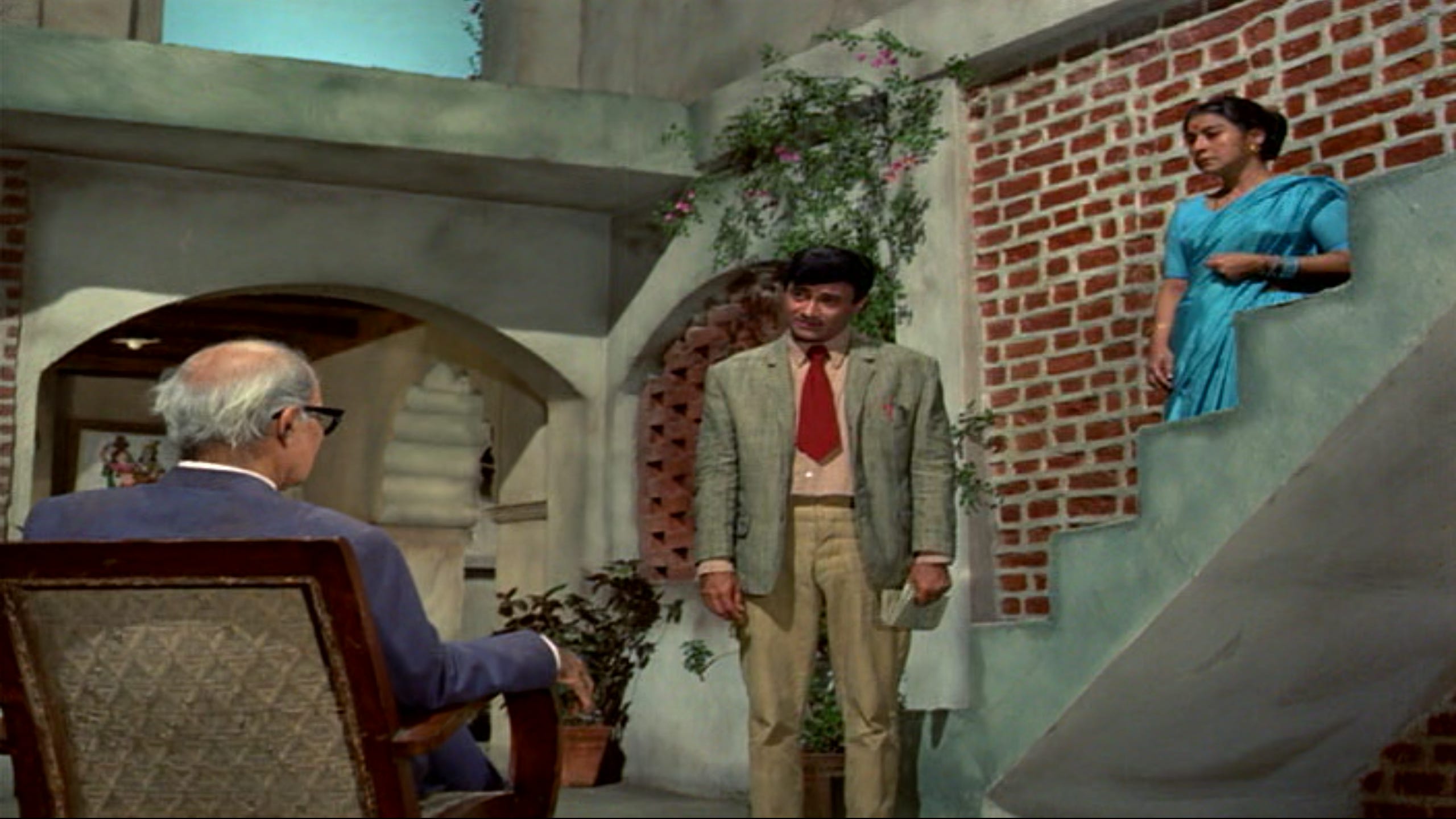
The question is central to Tere Mere Sapne, Vijay Anand’s adaptation of A.J. Cronin’s 1937 novel, The Citadel. The story is of an idealistic, newly qualified doctor, Anand (Dev Anand, Vijay’s older brother and frequent collaborator), who leaves his Mumbai upbringing and education behind in order to work as an assistant to Dr. Prasad (Mahesh Kaul) in an impoverished rural village. Anand quickly deduces that Dr. Prasad is critically unwell, but is undeterred by the circumstances and strives to do as much as he can for the villagers. Anand meets Dr. Prasad’s other assistant, Dr. Jagannath Kothari (Vijay Anand), a cynical alcoholic, with whom he slowly bonds. Anand establishes himself as a member of the community, providing medical care and emotional support to those in need, while fostering a sense of unity and well-being among the village’s residents. He courts and then marries Nisha, a local teacher (played by Mumtaz). However, when a tragic accident causes him to return to the city, the film begins to explore the question at hand. Anand is forced to reckon with the advancements his old classmates have made in their careers while examining his own journey. The contemplation of the principles that guide his classmates’ achievements coupled with evaluating the consequences of his own actions prompts a meditation on the meaning of success and the lasting impact of choices.
Paper Flowers
Much is made of Dr. Kothari, particularly his credentials; he holds an M.D. degree, while Anand only has an MBBS. (In African, Asian, and European countries, this degree is considered to be a “junior” degree compared to the MD, though it is equivalent to an MD degree in North America). Furthermore, he holds the distinguished title of MRCOG, a Member of the Royal College of Obstetricians and Gynaecologists, illustrating not only his Britain-based education and practice, but his prowess as a doctor on an international scale.
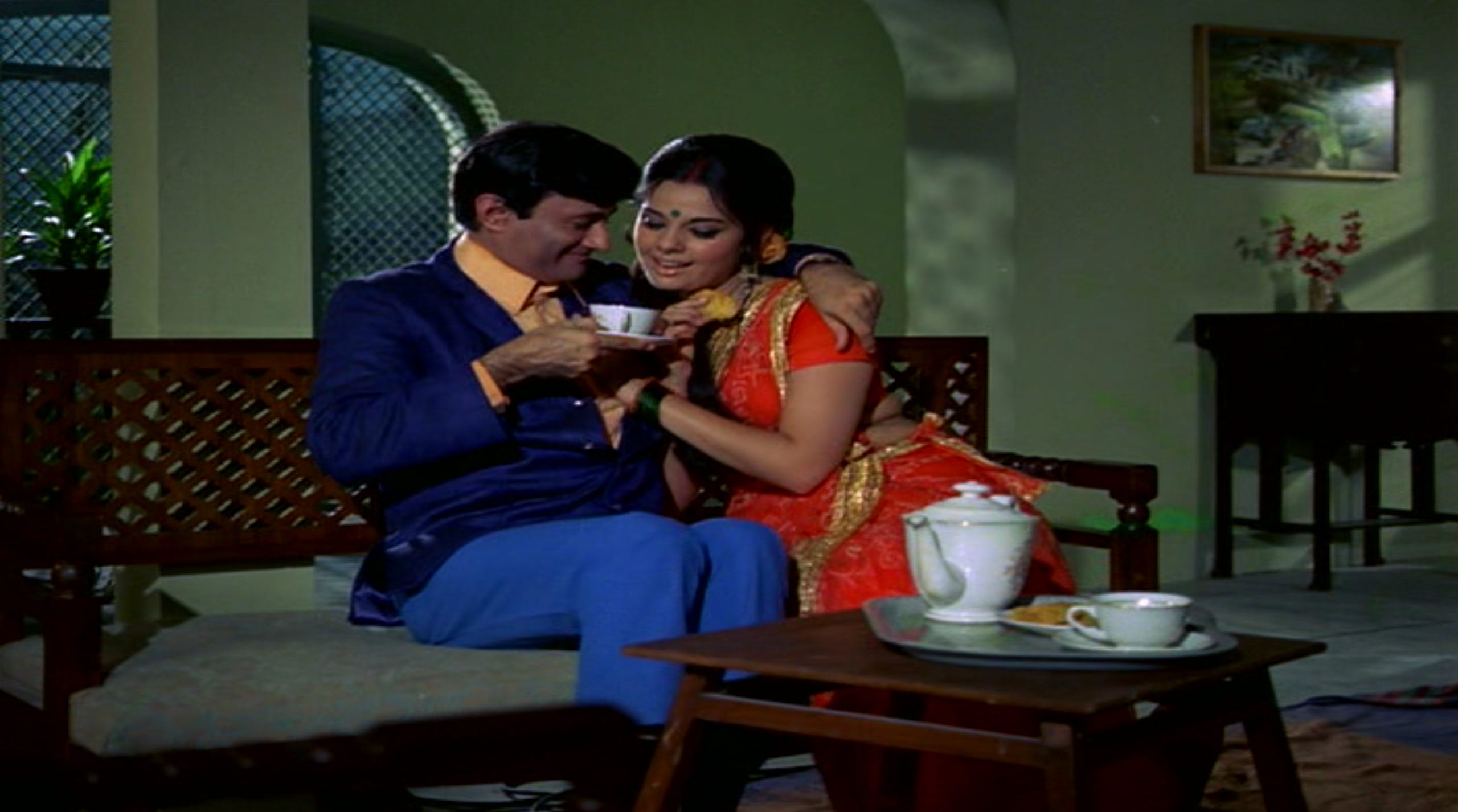
Upon Anand’s arrival, Jagan, as he likes to be called, offers his new colleague a glass of whiskey:
Anand: Jee nahin, main nahin peeta. (No thanks, I don’t drink.)
Jagan: Nahin? To zindagi kaise kate ghi? (No? Then how will you live?)
Anand: Main yahan kaam karne aaya hoon. (I’m here to work)
Jagan: Kaam? Seva? (Work? Service?) [laughs, raises glass] Anand, to you. I wish you all the luck.
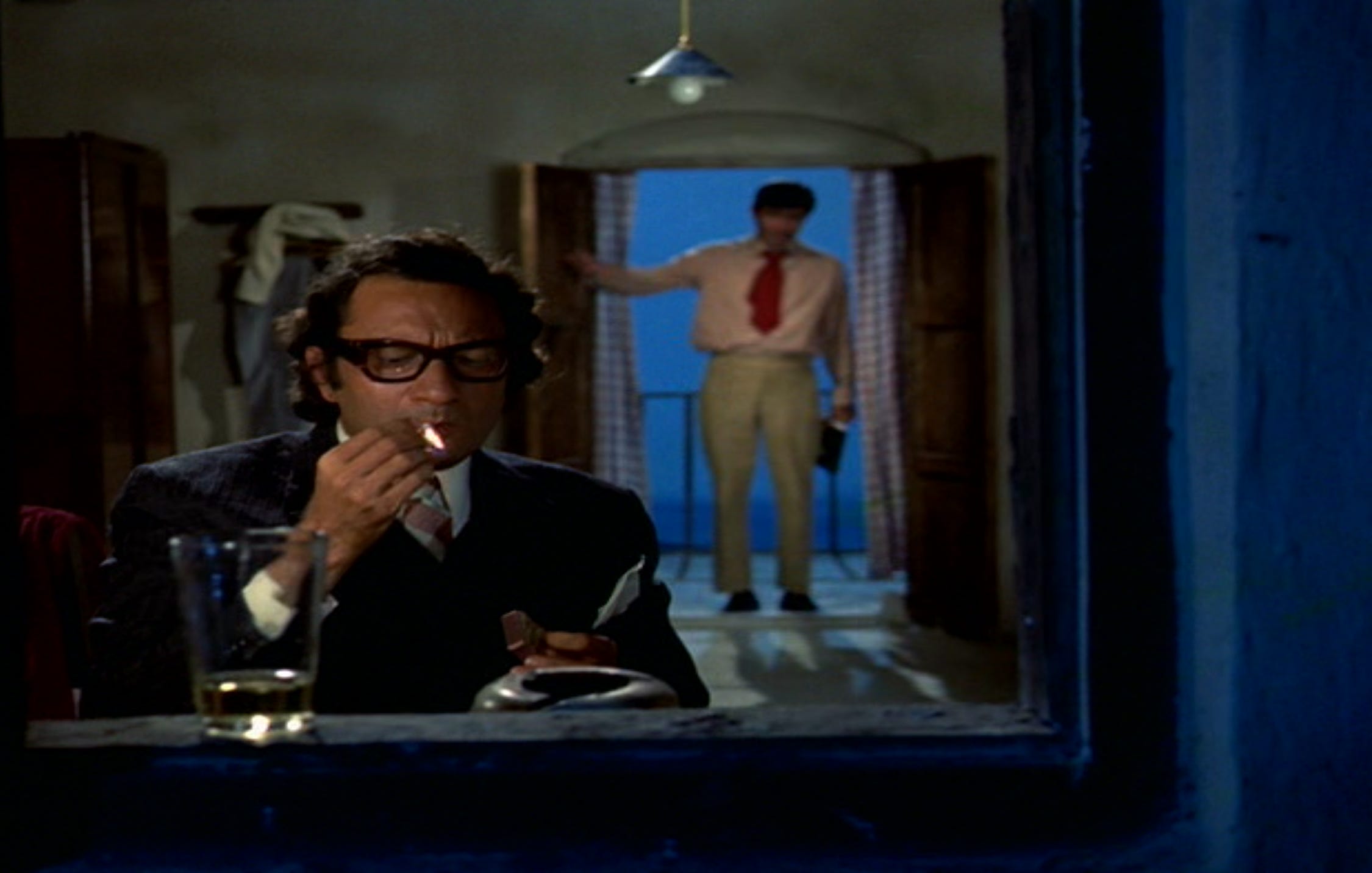
It’s worth noting how Vijay Anand frames the shot of Anand entering Jagan’s room: Jagan is at the foreground, sitting in near darkness, and Anand is positioned in the doorway with the light behind him. Jagan is at home in his proverbial cave, while Anand’s presence illuminates the space, symbolizing his role as a disruptor, bringing light and clarity to the darkness of Jagan's world. Anand's positioning in the doorway suggests his status as an outsider entering Jagan's domain, poised to challenge the status quo and potentially disrupt the balance of power. This visual composition effectively encapsulates the dynamic between the two characters and foreshadows the conflict and transformation that will unfold in their interactions.
Underlying Jagan’s sarcasm is the knowledge that he’s seen such idealism before. Anand eventually asks the question that’s on his mind and ours: what’s a doctor of such renown doing in the backwaters of rural India? Anand presses him,
Tharre ki badbudar bottle jab dekhta hoon to MRCOG London nahin samaj aata, (When I see this cheap, smelly liquor, I can’t reconcile it with your MRCOG credentials).
The invasive line of inquiry prompts a rebuke from Jagan,
Main ise bilkul nahin zaroori samajta tumhare samaj mein aaye. MRCOG bas paanch akshar hain jinka koi matlab nahin, aur yeh tharre ki bottle ek haqeeqat hai mere liye. (I don’t think it’s necessary for you to understand this. MRCOG are just five meaningless letters, but this bottle of liquor is a reality for me.)
Anand, with his airily aggressive approach, seeks to demean Jagan’s drinking habit, but reveals much about himself. For one, he believes his profession to be sacrosanct, and to sully it with a drink is to render it futile. Though he sheepishly accepts Jagan’s censure, it makes you wonder why he’d ask such a question in the first place. In doing so, he seeks to create a distinction between himself and Jagan; the dignity of his principles and his commitment to the work of improving the villagers’ lives is on a higher plane compared to Jagan’s daily indulgence. However, for Jagan, it’s simply about doing his job. He’s there to work and nothing more.
Later, in perhaps the film’s most important monologue, Jagan confesses that he too once had Anand’s idealism. A desire to apply his knowledge and skills to his countrymen brought him back home, back from the success and comforts of England, only to be met with derision from his fellow professionals and bureaucracy from the state. He declares,
Phir ek din, ya toh wo tang aake wapas bhag jaata hai, ya isi kisi jagah mein chhup kar apne aansoon peeta rehta hai. (Then one day, one either runs back to where he came from, or one hides in a place like this, drinking his tears.)
It’s a telling sermon; he could have returned to a thriving career in England, but chooses to work in a remote location, and while this may seem like an admission of defeat, there’s latent sanguinity in his decision. The discourse serves to further emphasize Anand’s commitment to his principles and Jagan’s tacit acceptance of the consequences of his actions. The scene ends with Anand asking,
Lekhin agar hum tum haar maan gaye, to phir sudhaarega kaun? (But if you and I accept defeat, who will bring reform?)
to which Jagan calmly responds,
Tum sudhaaro. Haalat ko bhi. Hum jaison ko bhi. (You lead the reform. Of the circumstances. And of men like me.)
Whereas Anand seeks more, Jagan has found peace.
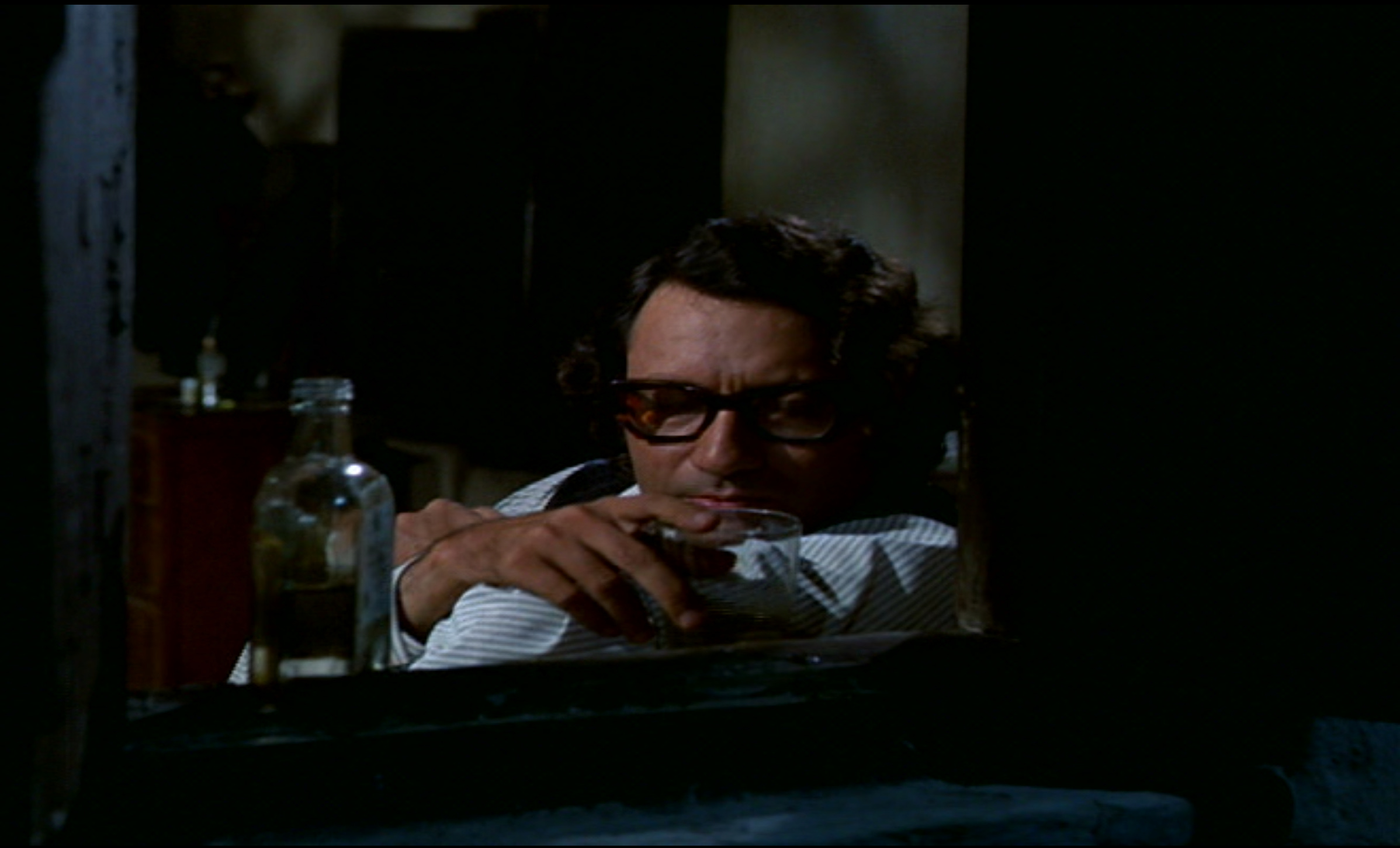
From Anand’s perspective, success at this juncture in his life is defined by moral integrity. By choosing to uphold ethical standards and values, he believes he’s contributing to the village’s long-term sustainability. Anand is unfazed by the lack of recognition or monetary gain, at one point stating how proud he is of his modest 250 per week salary. Nisha, too, shares this perspective and this forms the foundation of their relationship. She forgoes a professorship in an unnamed city in order to teach in the village. However, we bear witness to the downsides of Anand’s approach. He’s rigid to the point of inflexibility, which leaves him prone to conflict with those around him, as illustrated through his interactions with Jagan.
Anand begins to tire of village life, complaining repeatedly about having to cure the same aches and pains without getting the opportunity to do something more. He’s only been in the village for a few months, but it hasn’t taken long for Anand’s to realize his idea of success is incongruent with his personal desires. It’s at this point that the film begins to explore the path of measuring success by consequence.
Anand fully strays from his ideals when his pregnant wife suffers a hit and run while walking down a road; the driver, a rich man (Prem Nath, in a great cameo), predictably gets off scot-free. The incident leads to Nisha losing the child, and damages her uterus to the point where a future pregnancy may prove fatal. When the court absolves the rich man, Anand declares,
Aaj tak mere adarsh meri daulat thi, lekhin aaj se daulat hi meri adash ban jayegi. (Until today, my ideals were my wealth, but as of today wealth will be my ideal.)
Having had enough of his meager salary in the heartlands, he chooses to return to Mumbai.
It isn’t long before Anand realizes how far behind he is in comparison to his old classmates, all of whom have successful practices. He laments his lack of connections which could propel his social standing and career,
Jis duniya mein pasia hi qabiliyat ki nishani hai, usme paise ka na hona na-qabiliyat ka nishani ban jata hai. Aur yeh mujhe manzoor nahin hai. (In a world where money is a measure of success, not having any money means failure. I can’t accept that failure.)
He begins partaking in a kickback scheme with a group of doctors, all of whom send their patients to each other, and split the fees among themselves.
Anand’s focus shifts from helping his patients to seeing them for the sole purpose of enriching himself. In pursuing money, he begins chasing something else: status. He seeks to become renowned not for his skills as a doctor, but simply for how much it costs to see him. In the village, a busy waiting room was meant to illustrate the overwhelming demand the people had for adequate medical care. In the city, Anand’s waiting room becomes a status symbol, the place to be in order to get an audience with a popular doctor. While Anand establishes himself in high society, he alienates those closest to him. Nisha expresses disappointment over his new group of friends, and resigns herself to his neglect.
On the surface, Anand’s new approach is pragmatic and ultimately impactful. By prioritizing income over abstract principles, he enables Nisha and himself to live a better life. His flourishing practice moves him into a social strata where connections and influence only further solidify his success. The film makes the tangible results of Anand’s pivot abundantly apparent through his lavishly decorated flat and fancy suits.
Ultimately, the film makes it clear how it’s going to answer our initial question. The director, quite literally, takes a stand against his protagonist. Anand enrolls one of the surgeons involved in the kickback scheme to perform a kidney transplant on a child. Unbeknownst to him, the surgeon is hardly qualified to complete such a surgery and the child dies as a result. Distraught by his actions, Anand returns home, only to find Jagan waiting for him. The climactic exchange inverts the scene where Anand and Jagan meet for the first time. Since then, the characters’ journeys have led them down different paths.
Andhera rehne do, Anand. Jo baatein mein tumse kehne aaya hoon, roshni mein nah sunsakoge aur nah mein keh sakoonga. (Let the darkness be, Anand. What I’m about to say to you, you won’t be able to handle in the light nor will I be able to convey myself properly.)
This time, it is Jagan who stands illuminated by the light, while Anand is shrouded in the darkness of his own choices.
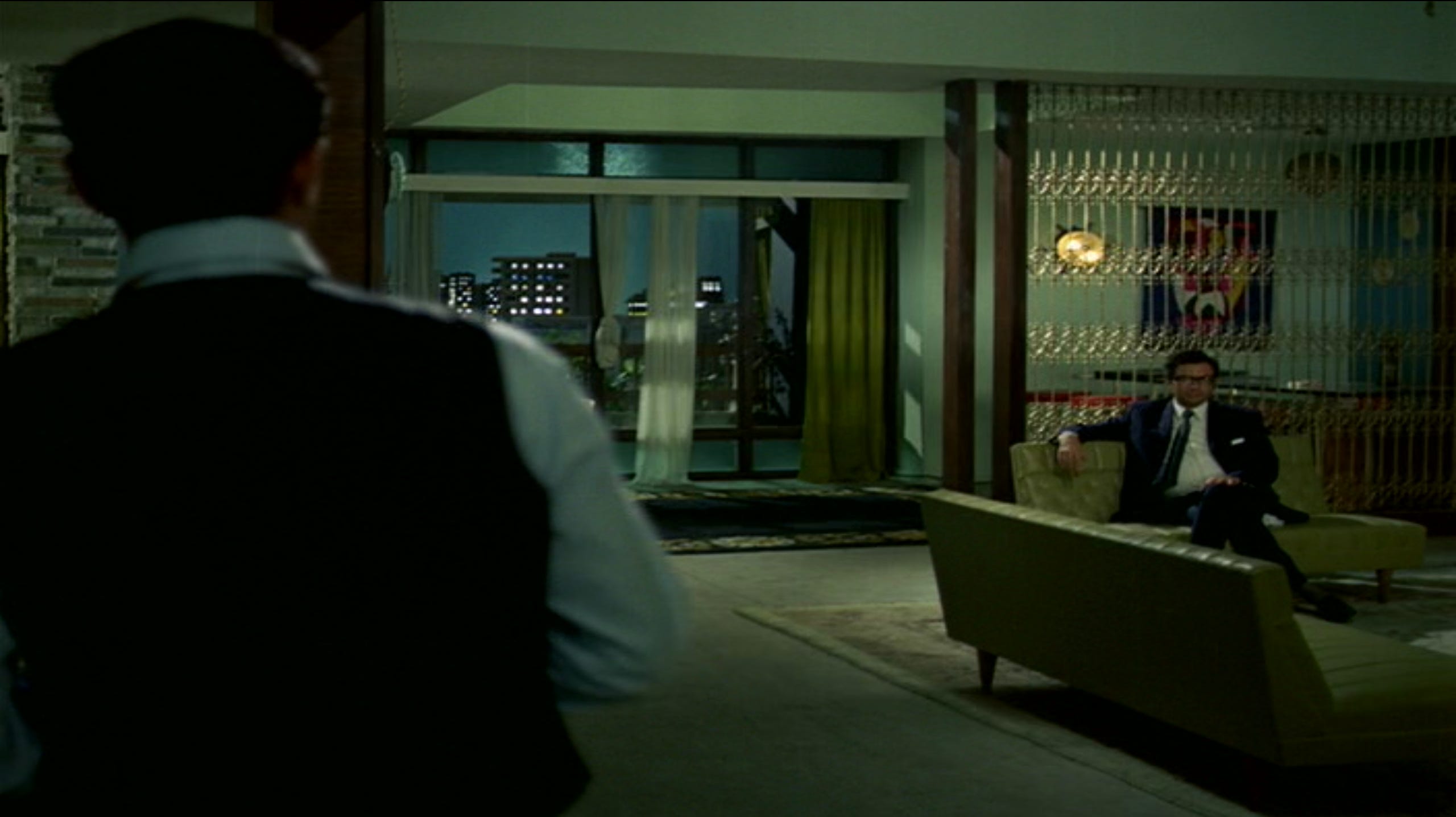
Tum wohi doctor ho, jo ek parai aadmi ki jaan bachane ke liye apne hone-wale bachche ke paise churaliye the. Tum wohi ek doctor ho jo ek maa aur bachche ki jaan bachane ke liye raat bar paseena bahate rahe the. Aur aaj, ek aurat apne bachche ko janam dehne se pehle shayad marr jaye. Uska bachcha janam lehne se pehle shayad marr jaye, kyunki jiske sahaare un dono ko zindagi ki umeed ho sakti hai, woh nashe mein choor pada hai. Apne kamyaabi ke nashe mein choor.
(You’re the doctor, who in order to save the life of a stranger, took money set aside for your own unborn child. You’re the same doctor who, in order to save the life of a mother and child, worked tirelessly through the night. And today, a woman may die before she can give birth to her child. A child may die before being born, because the one who should be supporting them is drunk. Drunken and delirious on his own success.)
Jagan is, of course, referring to Nisha, whose second pregnancy has all but eluded Anand while he’s been chasing his ambitions. The weight of Jagan’s words hang heavily in the air, and Anand is finally forced to reckon with the consequences of his choices.
Zindagi ki jadon ko pyaar se seencha jaye, toh hi usme phool kilte hain, Anand. Pyaar hi sookh jaaye, to naam, shaurat, daulat, sab khagaz ke phool hain jinme na doosron ke liye khushboo hai ya apne liye khushi. (Only when you water the roots of life with love do flowers bloom, Anand. When love dries up, your titles, status, wealth all become paper flowers, which produce no fragrance for others and no happiness for yourself).
Newly enlightened, Anand stops Jagan from illuminating the room as he weeps in the dark.
All That to Say This
By the time Tere Mere Sapne ends, nearly three hours will have elapsed. This isn’t to say this isn’t a film worth watching. On the contrary, you may find yourself asking why it takes this movie so long to reach its captivating crescendo of emotion and storytelling brilliance.
So why does it take so long? The biggest reason for the bloat is the Malti Mala storyline. In the film, Malti Mala (Hema Malini) is a popular actress. Anand and Nisha see one her movies on their first date, and by the end of Tere Mere Sapne, Anand becomes her personal physician and confidant. It’s quite a leap. Malti’s character is meant to symbolize the success Anand so desperately craves when he moves back to Mumbai. They are introduced when Anand starts moving in higher social circles, and he is immediately taken by the way people want to be in her company constantly. As he gains her trust, he becomes consumed by his proximity to celebrity, offering at multiple times to introduce others to Malti and flaunting his access to the biggest actress in town. Malti, however, wants nothing but to shed the trappings of fame,
Main sirf ek naam hoon, insaan nahin hoon. Main aap logon ka banaya hua ek jhoot hoon jisme apni sachai ko gayi hai. (I’m just a name, not a person. I’m a lie created by you all [society] within whom my own truth has been lost.)
Malti serves as a representation of the downsides of Anand’s ambition, but further complicating the storyline is the unnecessary love angle introduced between the characters. Rather, it’s unrequited love on Malti’s part. As Anand ingratiates himself further into her inner circle, she begins falling in love with him. Anand, not wanting to squander his access to Malti, never reveals he’s married. He playfully flirts and leads her on, only for the entire plot point to blow up at the end without any reasonable conclusion. Anand fails to recognize Malti as a symbol of his aspirations; this either speaks to his ignorance or the filmmaker’s inability to convey the thematic depth of the narrative. I’m inclined to believe the latter. The dialogue I quoted above is perhaps the biggest waving red flag through which the parallels between Malti and Anand are highlighted. Hema Malini beautifully conveys the emotion that the dialogue requires, and yet the scene ends abruptly, without any reaction or response from Anand. It’s quite possible that Vijay Anand felt compelled to include this romantic angle simply because of how wildly successful the pairing of Hema Malini and Dev Anand was in his previous film, Johny Mera Naam. Regardless, the Malti storyline weighs the film down, and dilutes the impact of the main narrative focus.
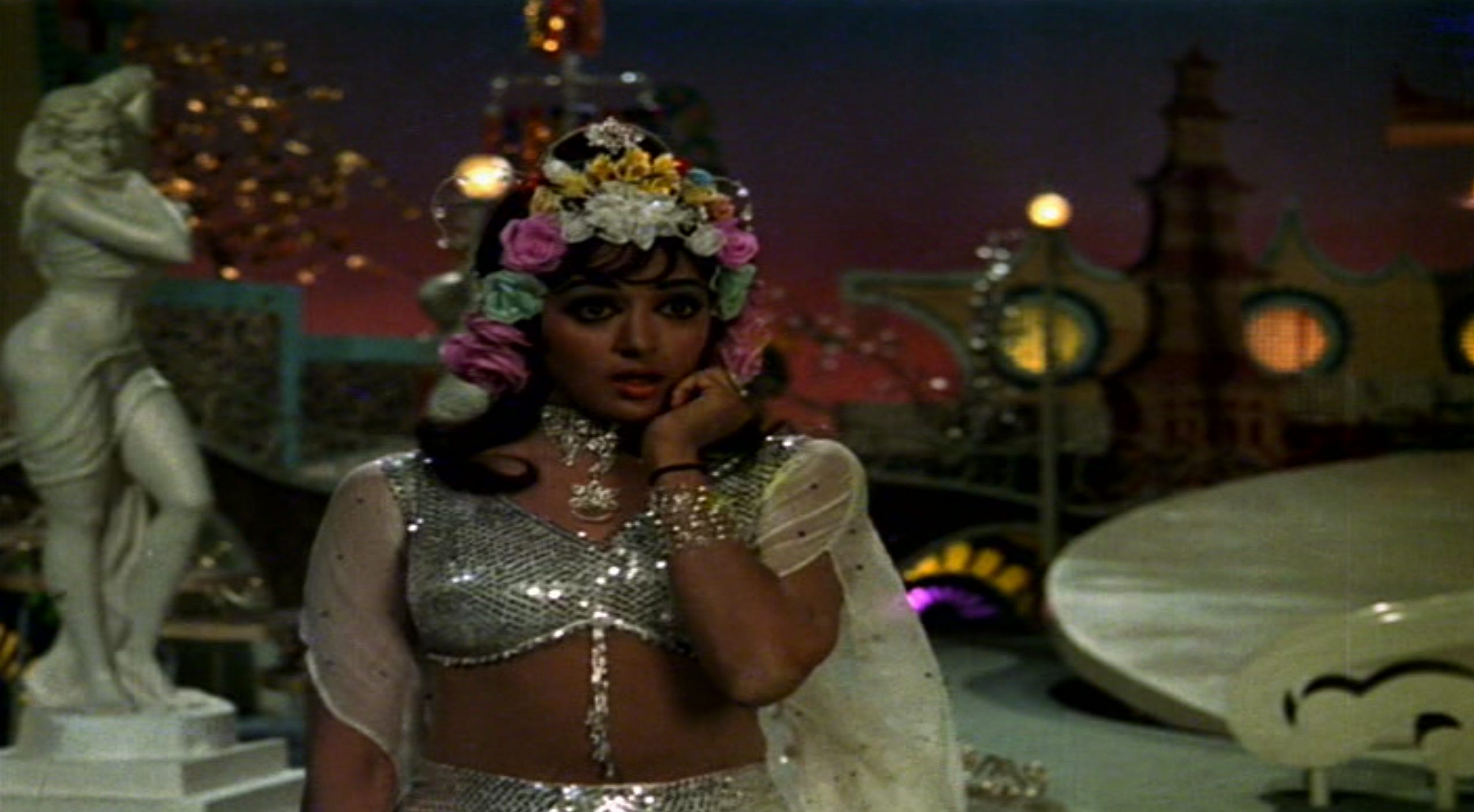
Another reason this film runs long is that there are eight songs, four of which come in the first hour. The majority are unnecessary, but one song in particular stands out: Jaise Radha Ne Mala Japi. The opening lines state:
Jaise Radha ne mala japi Shyam ki/Maine odhi chunariya tere naam ki (Like Radha chanted the rosary of Shyam/I’ve wrapped myself in a scarf of your name)
In Hindu mythology, Shyam is another name for Krishna, and Radha is his lover. The song, sung from Nisha’s perspective, emphasizes her feelings towards Anand being akin to the timeless devotion and eternal bond shared by the two deities. The beauty of this song lies in how it’s perfectly sung by Lata Mangeshkar, its lyrics, and how it’s visualized by Vijay Anand.
The song has four stanzas which capture the progression of Nisha and Anand’s relationship, and Vijay Anand likewise uses four scenes to mirror each stanza, showcasing the evolving dynamics between the characters with poetic symmetry. The aforementioned opening stanza is Nisha declaring her love for Anand; the first time she has done so. The emotion comes as a revelation to the both of them.
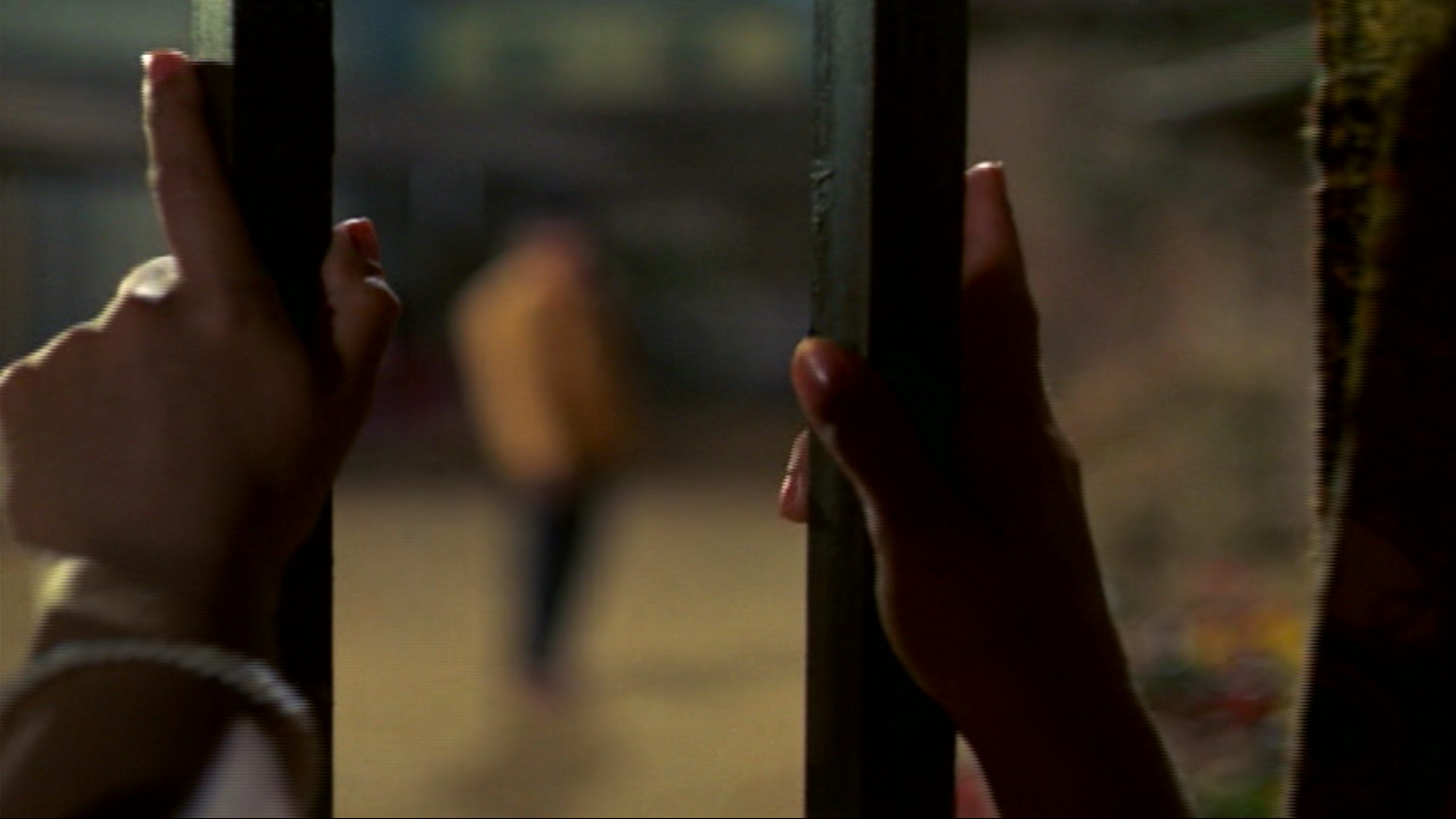
The word “mala” has two meanings; the first is “rosary”, the other is “garland” as in the garland of flowers a couple places upon each other in a traditional Hindu wedding ceremony. As Nisha sings the word “mala,” she is holding on to the iron bars of her window while Anand stands outside. Vijay Anand zooms in on her hands at this point and places Dev Anand directly in between the bars, making it seem as if Nisha is placing a garland (mala) around her beloved.
The opening lines of the next two stanzas are as follows:
Preet kya judee/Dor kya bandhee/Bina jatan, bina yatan/Ho gayi main nayee
(How our love connected/How the thread of our lives became entwined/Without any effort, without any difficulty, I was reborn)
Kya tarang hai/ Kya umang hai/More ang ang racha pika rang hai
(What ecstacy/what passion/My body is full of color)
The second stanza depicts Nisha and Anand getting married, with the visuals matching the lyrics of connection and attachment. The end of the second stanza shows the couple alone in their room, the wedding procession complete. Anand goes to kiss Nisha’s palm which she coyly retracts, and the camera then does a rapid pan with Nisha now brushing her hair on a terrace with the wind blowing, and Anand lying in bed. The night has passed, and the couple has consummated their marriage, which the third stanza aptly illustrates. The song ends with the living their life together as newlyweds, the courting and diffidence of the early stages of their relationship behind them:
Pa liya tujhe/Payi har khushi/Chahoon bar bar chadoon/Teri palki
(I found you/I found all the happiness/I want to ride in your palanquin again and again)
I chose to highlight this song because in four minutes of screen time, Vijay Anand conveys a wealth of information about Nisha and Anand’s relationship, without any unnecessary exposition. While there are a few other songs worth listening to and watching, namely Hey Maine Kasam Li and Jeevan Ki Bhagiya Mehkegi, none are visualized with the dexterity and finesse of Jaisa Radha Ne Mala.
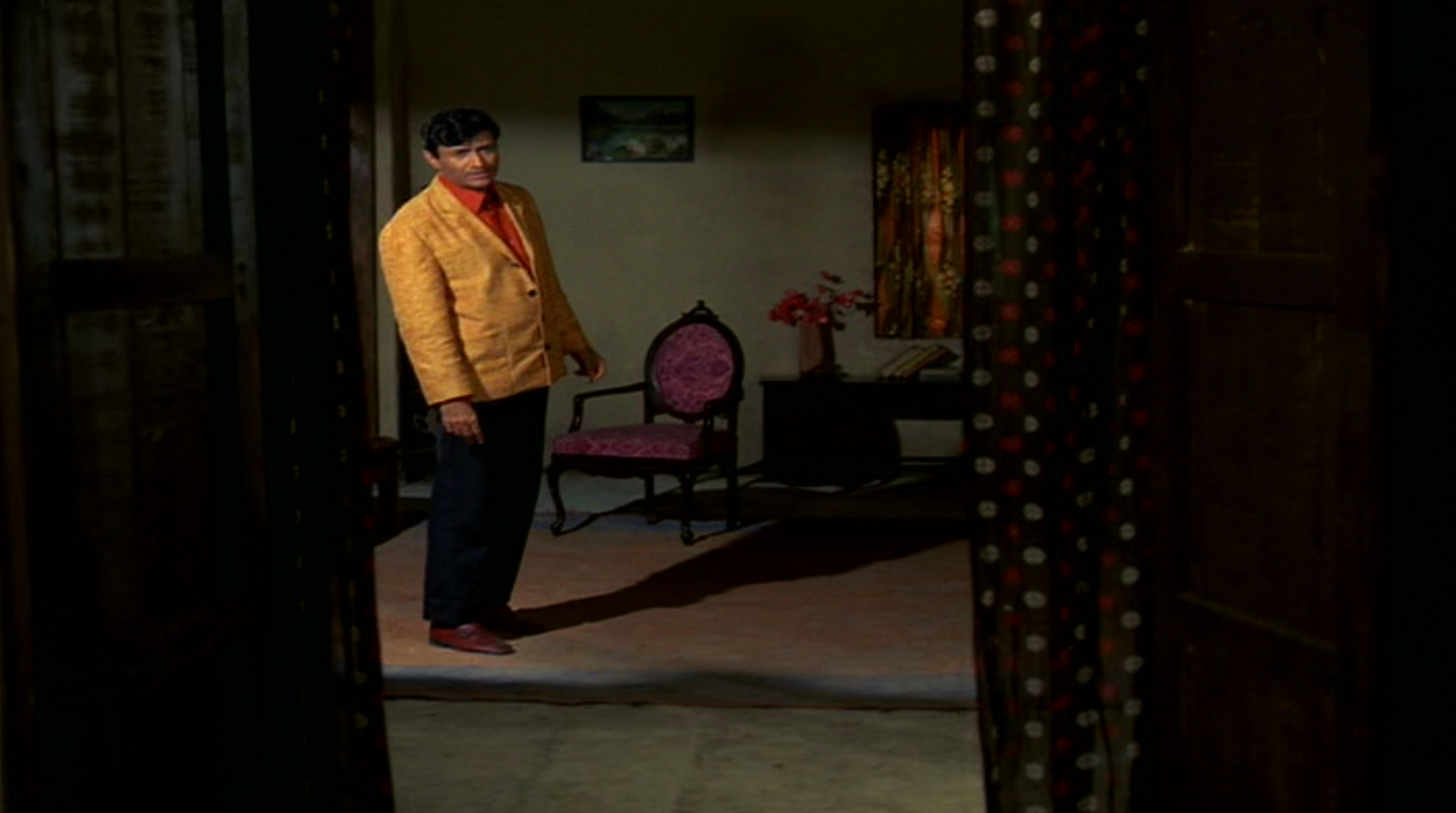
The best part of this song is actually the scene right before it starts. After an argument about whether or not they should get married, Nisha storms away with Anand calling out to her. The camera is static, as is Anand, standing in place, calling out to Nisha. When she doesn’t respond, he begins to walk away, but before he does, he does a small gesture by swinging his right arm as if to say, “damnit.” It’s a seemingly meaningless gesture, and the scene could’ve ended with the actor simply walking out of the frame. However, the small bit of panache Dev Anand adds elevates the moment, leaving his charisma and style all over the frame.
I can’t say I have an answer to the question I posed at the start of this essay. When I asked a friend, he replied, "Intent doesn’t matter, only consequences.” I found his statement quite reductive. Do principles have no part in our decision-making? Are they unnecessary, obsolete even? Emphatically, I can state that isn’t the case. Principles provide a foundation for behavior and decision-making, helping us navigate complex situations with clarity and purpose. Without them, judgment becomes arbitrary, risking the erosion of trust and integrity.
Tere Mere Sapne stresses the balance we must find between our principles and the consequences of our actions; not leaning too much in one direction as to sacrifice integrity for short-term gains, nor ignoring the real-world outcomes of our decisions in pursuit of abstract ideals. It serves as a poignant reminder of the importance of navigating the complexities of life with mindfulness. It’s for that reason, this is a film worth watching. Oh, and Dev Anand’s outfits.
Loved the review of this forgotten classic. Vijay Anand didn't get the mention he deserves in Indian cinema.