
Ankhon Dekhi
Rajat Kapoor, 2013
The Setup
It is evident that until doubt began, progress was impossible.
Philosophers throughout history have underscored the importance of doubt. Socrates espoused doubt through his method of questioning, challenging others to examine their beliefs and assumptions. Descartes doubted everything until he reached the one unequivocal truth: his own existence as a thinking being, “I think, therefore I am.” Hume questioned the existence of external reality beyond perception, while Kant examined the limits of reason and the boundaries of human knowledge. Kierkegaard and Nietzsche saw doubt as a form of liberation; the former viewing it as essential for spiritual engagement, while the latter embraced doubt as a tool to dismantle traditional moral systems. Sartre and Camus considered doubt central to finding value in life, particularly in the absence of predetermined meanings.
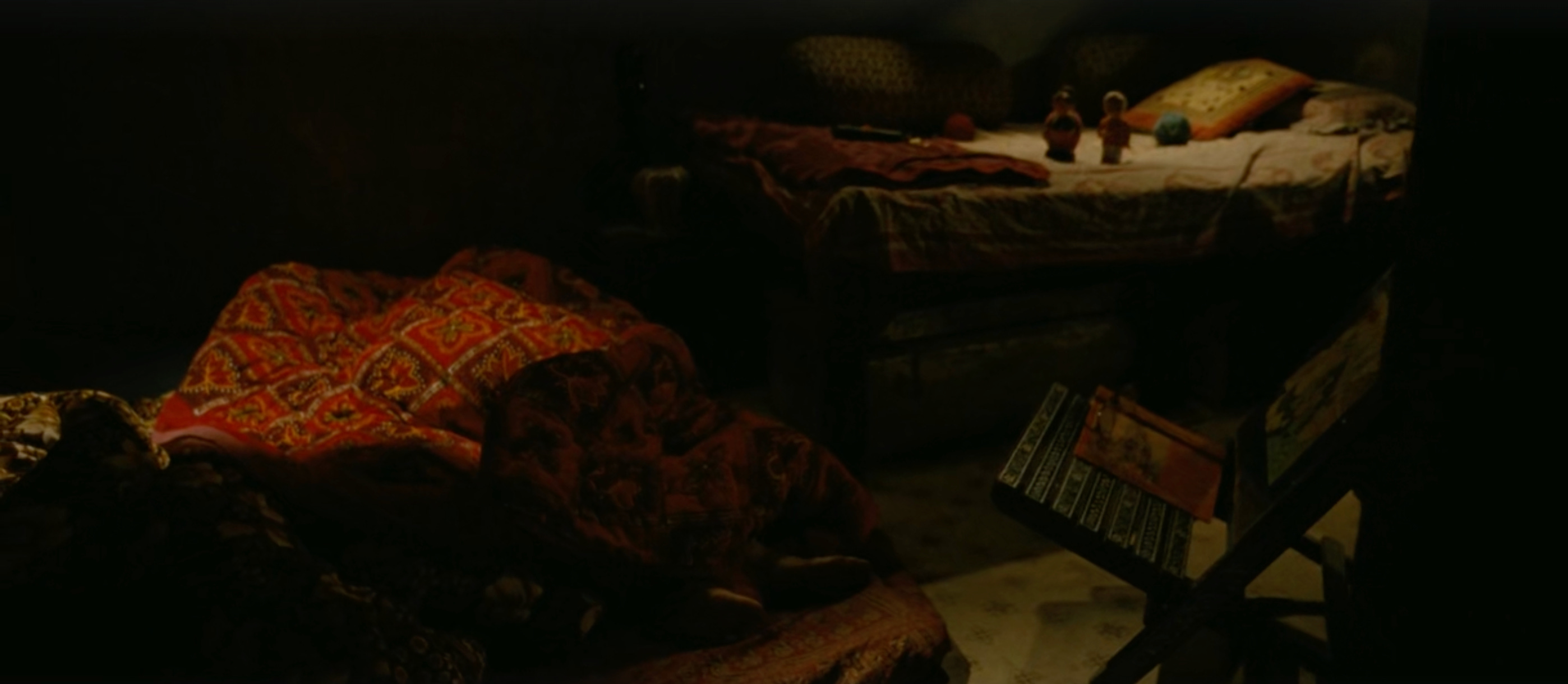
Eastern philosophy, much like its Western counterpart, acknowledges doubt as an integral part of intellectual inquiry. However, Eastern traditions often approach doubt with a more introspective lens, focusing on its role in transcending ego and attachments. In Buddhist teachings, doubt is listed as among the Five Hindrances that obstruct meditation and spiritual progress. The Gita echoes this claim, portraying doubt as a formidable obstacle on the path to wisdom and spiritual liberation. Krishna warns that a person riddled with doubt finds neither joy in this world nor the next, emphasizing the need to resolve uncertainty through devotion, discernment, and self-realization. At the same time, Hinduism acknowledges that grappling with doubt can be a transformative process. Arjun’s crisis of doubt on the battlefield in The Mahabharat becomes the catalyst for receiving divine knowledge, suggesting that sincere questioning, when coupled with a desire for truth, can lead to profound spiritual insight and liberation.
Ankhon Dekhi explores this very idea through the story of Bauji (Sanjay Mishra), a middle-aged man who resolves to believe only what he personally experiences. What begins as a personal conviction quickly unfolds into a radical shift in his understanding of truth, sparking profound changes not only in his life but also in his relationships and community. By questioning widely accepted norms and secondhand beliefs, Bauji’s journey becomes a powerful reflection on the tension between individual perception and collective reality.
Seeing is Believing
Bauji lives in a cramped home in Delhi, surrounded by a tightly knit family and community steeped in conventional thinking. His transformation begins with a deceptively simple encounter: a neighborhood rumor falsely accuses his daughter’s boyfriend of wrongdoing. When Bauji investigates the claim himself and finds the young man innocent, he experiences a rupture in his understanding of truth. How could everyone fall prey to a mere rumor? From that moment on, he resolves to believe only what he can directly observe. This radical epistemological commitment compels him to reject second hand information in all its forms - no matter how authoritative or commonly accepted. His newfound skepticism leads him to question the existence of things people never scrutinize: whether or not tigers actually roar, gravity, or even religious dogma. What appears at first as naïveté gradually unfolds into a philosophical awakening that unsettles every aspect of his life.
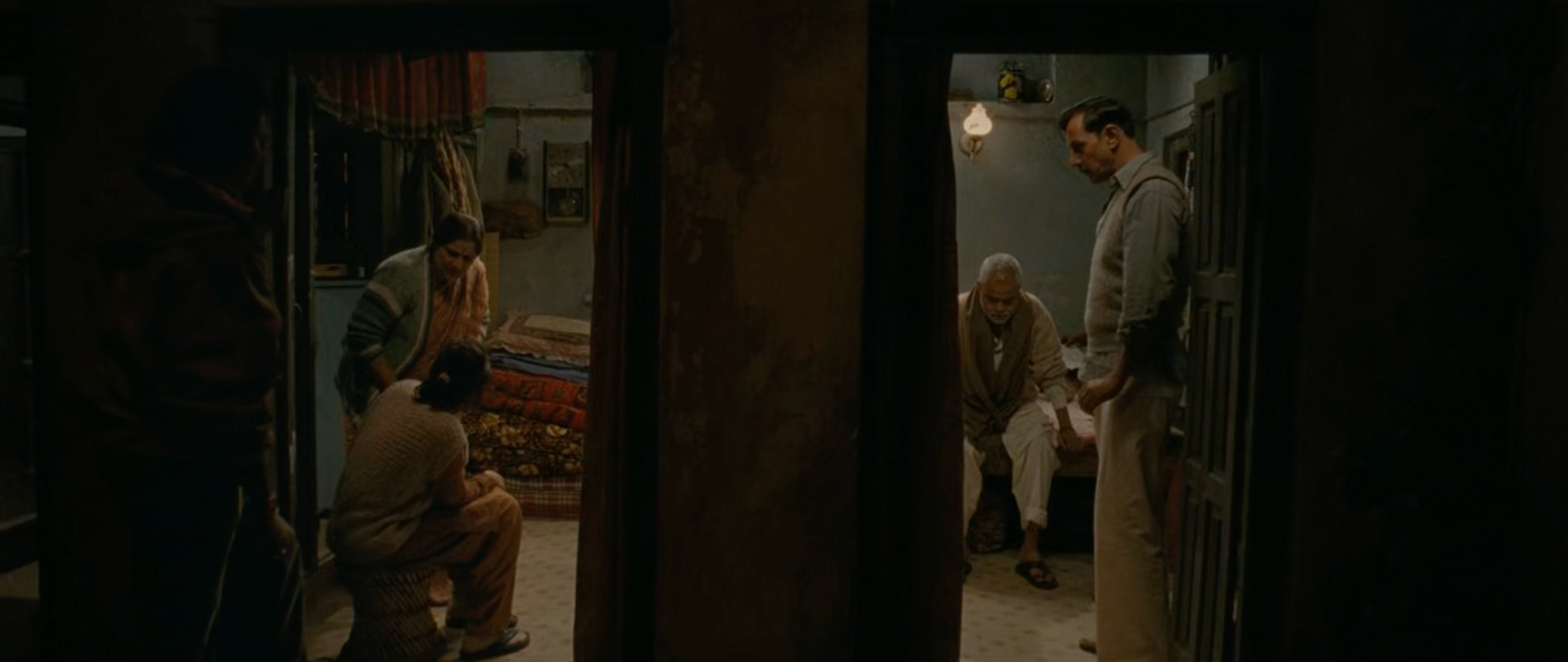
Bauji’s insistence on direct experience sends shockwaves through his household and neighborhood. His rejection of assumed truths undermines the invisible scaffolding of communal life - shared beliefs, gossip, inherited customs- and prompts others to reflect on how much of their worldview is constructed from unexamined information. While some view his behavior as eccentric or destabilizing, others are drawn to the clarity and integrity of his method. His home evolves into a kind of informal salon, where people gather not just out of curiosity, but in pursuit of something more honest, more real. Although his approach often leads to absurd or comedic moments, the humor is underpinned by deeper philosophical tension: what is the cost of authenticity in a world built on convenience and consensus? Through Bauji, the film examines the uneasy relationship between perception and reality, individual inquiry, and social conformity.
Standing in direct contrast to Bauji’s radical doubt is his brother, Rishi (played by the director himself, Rajat Kapoor), who serves as the voice of pragmatic reason within the household. Where Bauji seeks existential clarity, Rishi is concerned with daily necessities - paying the bills and maintaining social stability. Beyond theoretically challenging Bauji, Rishi reminds his older brother the consequences of losing a job or refusing a marriage proposal for his daughter based on abstract qualms. Rishi’s worldview is grounded in shared experience - what works, rather than what is verifiably true. In a telling moment, Rishi becomes exasperated when Bauji questions whether they should celebrate a religious festival simply because Bauji hasn’t personally seen God. Their clashes underscore the film’s central dialectic: the tension between existential freedom and functional order. When Bauji calmly replies, “Maine dekha nahin toh main kaise maan loon?, (If I haven’t seen it, how can I believe it?), it isn’t merely a quip - it’s a philosophical rupture, revealing how doubt can challenge even the most intimate relationships and force a reevaluation of the assumptions that underpin everyday life.
All That to Say This
The theme of doubt, particularly as a force that destabilizes identity, morality, and social roles, is not unique to Ankhon Dekhi, but instead serves a through-line in Rajat Kapoor’s body of work. His films often explore the porous boundary between constructed realities and lived experience, portraying characters whose crises of belief unravel both personal certainty and the societal fabric around them.
In Raghu Romeo (2003), Kapoor introduces us to a socially awkward waiter infatuated with a soap opera star, unable to distinguish between the fictional character she plays and her real-life persona. Raghu’s (incredibly played by Vijay Raaz) doubt is ontological in nature; he cannot grasp what is real and what is performed. His misguided quest to protect “Neetaji” (Maria Goretti), whom he believes to be in danger like her TV counterpart, illustrates how unchecked belief, untethered from rational or empirical grounding, can be just as disruptive as Bauji’s radical skepticism. Yet beneath Raghu’s delusion lies a desperate yearning for meaning and connection in a world that marginalizes him. Kapoor doesn’t ridicule Raghu; instead, he uses him to explore how doubt, when born out of disillusionment, can lead to alternative moral frameworks that, while irrational, are deeply human.
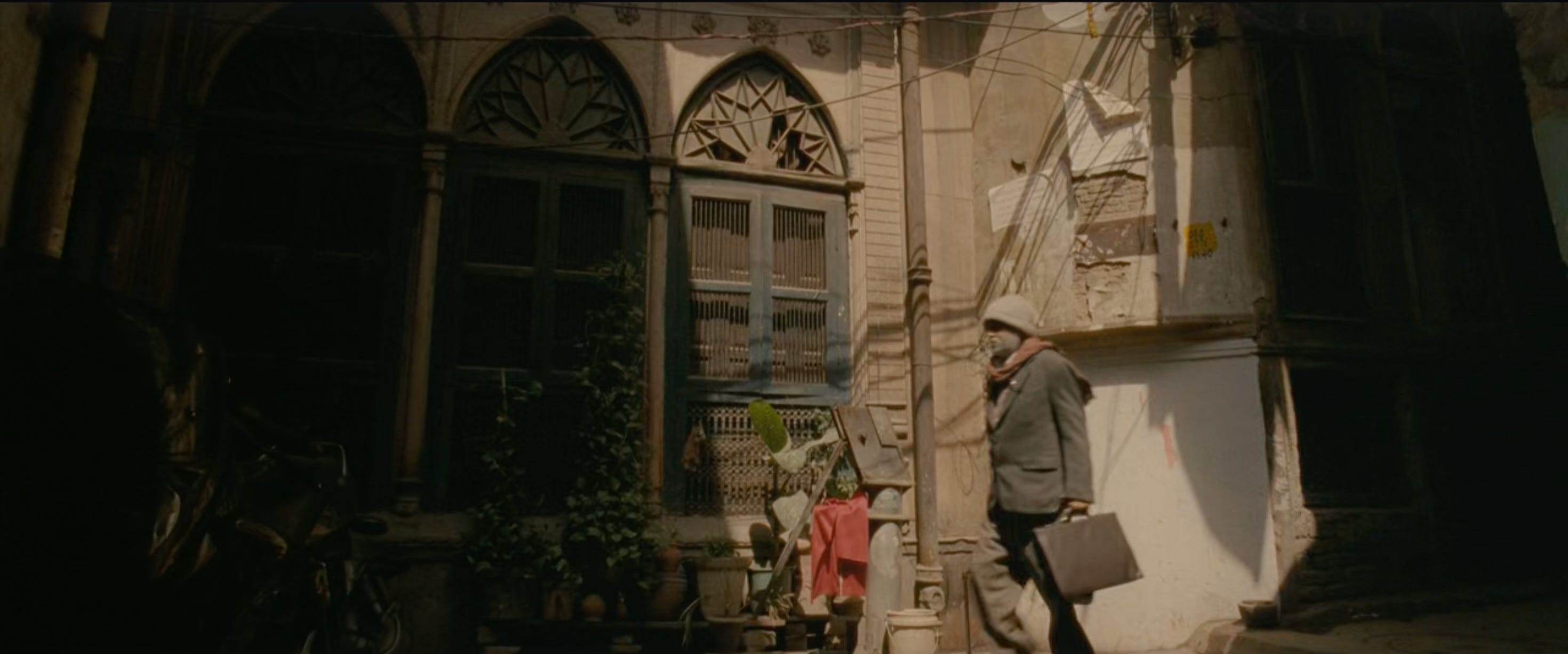
Similarly, in Mithya (2008), Kapoor weaves a darkly comic narrative about a struggling actor, VK (Ranvir Shorey), who is mistaken for a powerful gangster and drawn into the underworld. VK’s identity, once rooted in performance and fiction, begins to fracture as he inhabits a role that was never his to play. The film blurs the line between acting and being, self and other, until VK is no longer certain of who he truly is. Doubt in Mithya is psychological and existential; it erodes the protagonist's sense of self even as it exposes the performative nature of social roles. Like Bauji, VK is forced to live by improvisation, navigating a reality that no longer abides by familiar rules or truths.
In all three films, Kapoor uses doubt not as a device to solve mysteries or lead to definitive answers, but as a persistent state of being - a challenge to epistemological comfort zones. Whether spiritual, moral, or identity-driven, his character’s uncertainties are not resolved so much as inhabited. Doubt becomes a means of exploring the fragility of selfhood and the unreliable nature of perception in a complex, often absurd world.
What unites Kapoor’s protagonists - Bauji, Raghu, VK - is their resistance to dominant narratives: be they societal expectation, media fantasies, or criminal hierarchies. In doing so, they expose the artificiality of the worlds they inhabit. Kapoor’s cinematic lens insists that genuine insight emerges not from the acceptance of conventional truths, but from the discomfort of asking, “What if none of this is real?”
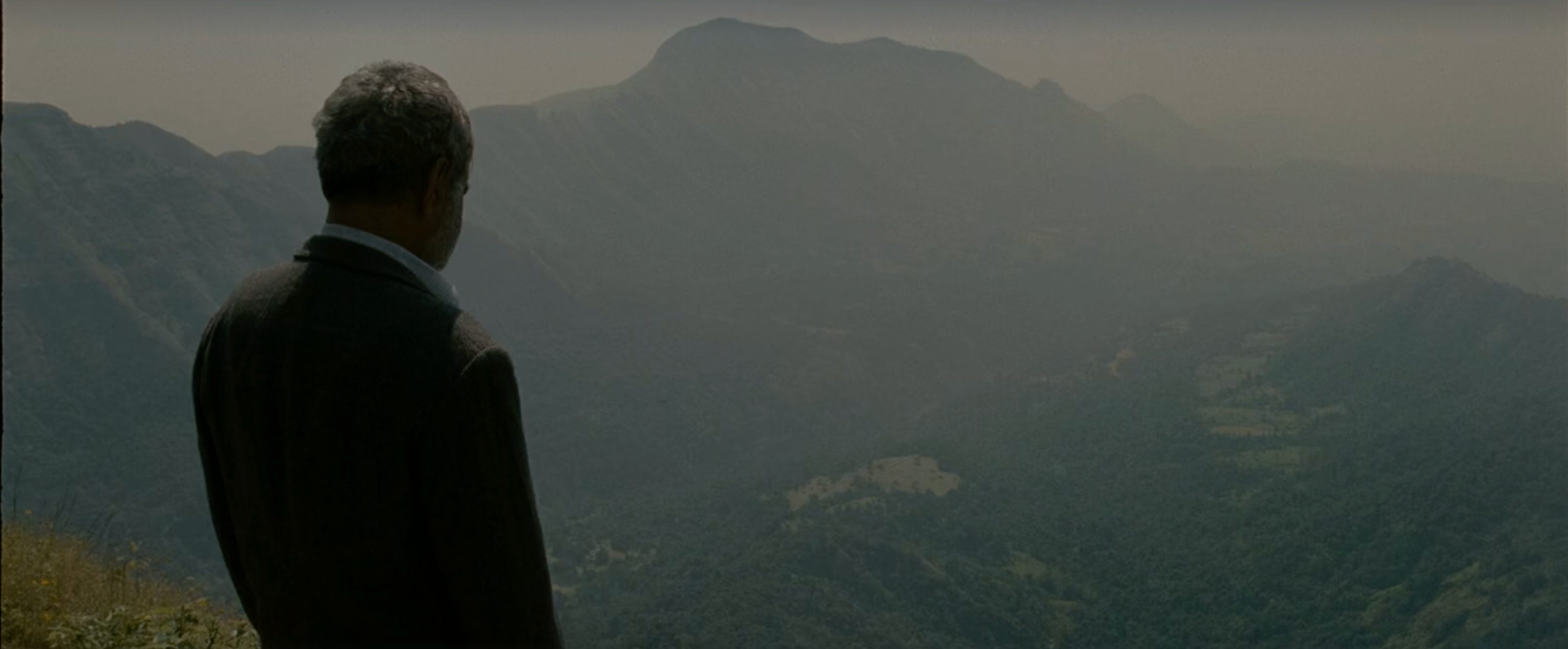
Yet among all of Kapoor’s protagonists, Bauji stands apart in both depth and impact. Unlike Raghu’s delusion or VK’s identity crisis—both rooted in confusion between fiction and reality—Bauji’s revolt is conscious, deliberate, and principled. His resistance isn’t sparked by accident or misunderstanding but by a lucid recognition of the gap between inherited beliefs and lived experience. Ankhon Dekhi therefore transcends satire or dark comedy and enters the realm of moral inquiry. It doesn’t just expose artificiality—it asks what we should do once we’ve seen through it. The film’s emotional resonance, gentle pacing, and philosophical clarity make it Kapoor’s most mature and contemplative work. With Sanjay Mishra’s nuanced performance anchoring the narrative, Ankhon Dekhi becomes a rare piece of cinema that is both intellectually provocative and emotionally disarming. It compels viewers to confront their own unexamined beliefs and, in doing so, offers not just a story but a quiet invitation to wakefulness. It is, arguably, the most fully realized expression of Kapoor’s thematic concerns—making it not only his standout film, but one of the most quietly radical works in contemporary Indian cinema.
Liked the narrative about “ doubt “could it be “ Maya “ ?